Hemp-Derived THC Is Not K2: How to Tell the Difference Between Cannabis Products and Synthetic Cannabinoids
hemp-derived THC and K2! Recent coverage of hemp-derived THC drinks and gummies has renewed public interest in products sold outside traditional cannabis dispensaries. At the same time, many consumers still confuse hemp-derived cannabinoids with K2, Spice, or other synthetic cannabinoid products. The names may appear together in online discussions, but the substances are fundamentally different.
Understanding the difference between hemp-derived THC and K2 matters because product labels, manufacturing standards, expected effects, and medical risks can vary substantially. A product marketed as a hemp item is not automatically equivalent to a synthetic cannabinoid, and a product described as “herbal incense,” “legal high,” or “not for human consumption” should never be assumed to be a mild cannabis alternative.
This guide explains the distinctions in clear terms and offers practical ways to evaluate unfamiliar cannabinoid products without relying on branding, flavor names, or unsupported marketing claims.
What Is Hemp-Derived THC?
Hemp-derived THC is tetrahydrocannabinol extracted from or produced using compounds found in hemp. Hemp and marijuana are both forms of the cannabis plant, but hemp is generally defined in federal law by its low concentration of delta-9 THC before processing. Depending on the product and manufacturing method, hemp-derived products may contain delta-9 THC, delta-8 THC, or other hemp-related cannabinoids.
THC acts on the body’s endocannabinoid system, particularly cannabinoid receptors in the brain and nervous system. Its effects can include euphoria, relaxation, altered perception, impaired coordination, drowsiness, anxiety, and short-term memory changes. The intensity depends on the specific cannabinoid, dose, formulation, tolerance, and whether other substances are involved.
Hemp-derived products may be sold as gummies, beverages, tinctures, vape products, capsules, or other consumer goods. However, the quality and regulatory oversight of these products can differ widely. “Hemp-derived” describes a source or manufacturing pathway; it does not guarantee accurate potency, purity, or safety.
What Is K2 or Spice?
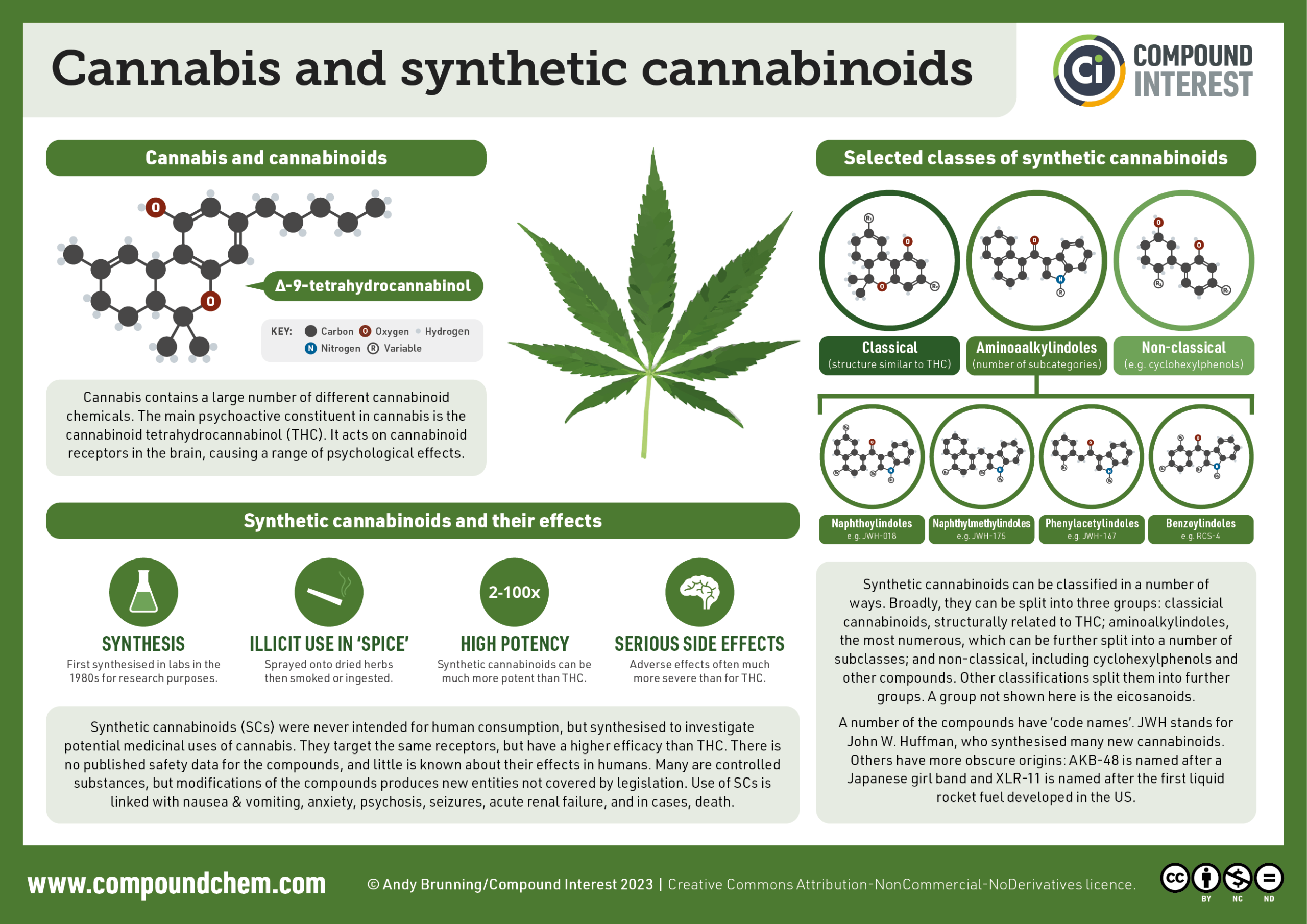
K2 and Spice are common names for mixtures containing synthetic cannabinoids. These chemicals are designed to interact with the same general receptor system as THC, but they are not simply concentrated or extracted cannabis. Many synthetic cannabinoids have a different molecular structure, can bind more strongly to receptors, and may produce effects that are more intense or unpredictable than those associated with ordinary cannabis.
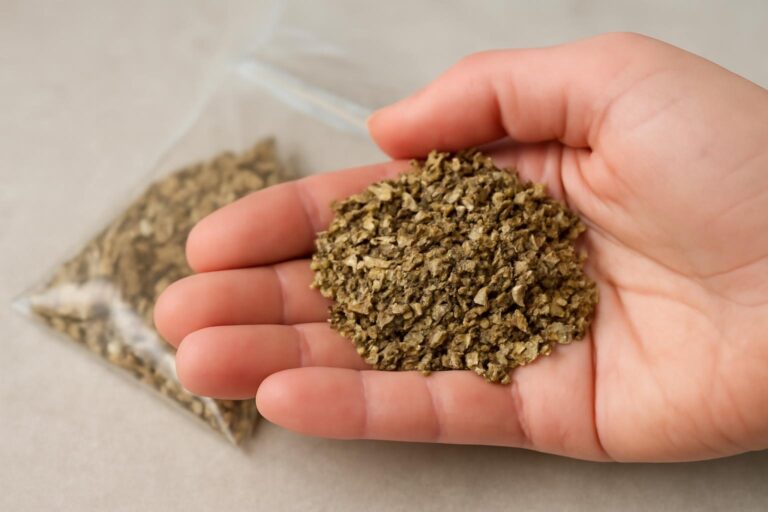
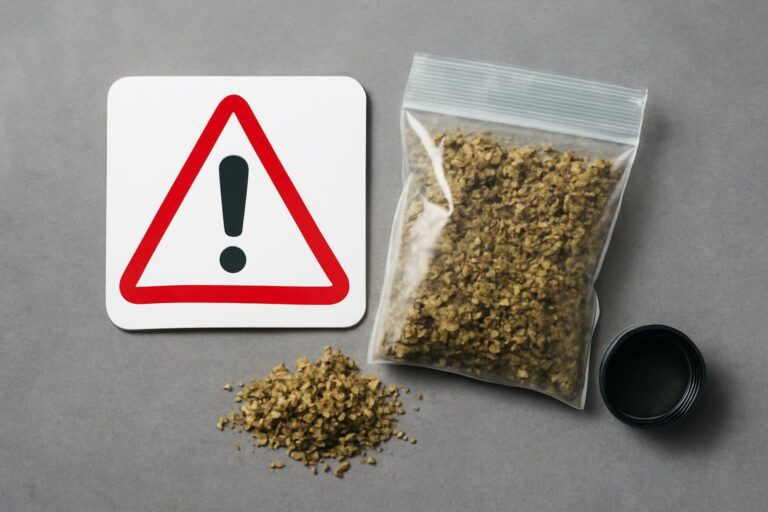
K2 products have historically been sold under misleading labels such as herbal incense, potpourri, research chemicals, or legal highs. Packaging may list plant material, fragrance ingredients, or a brand name without identifying the actual psychoactive chemicals applied to the material. Formulas can change quickly, even when the packaging looks identical.
That inconsistency is one of the central dangers of synthetic cannabis. Two packets with the same product name may contain different chemicals or different concentrations. Uneven application can also create isolated areas with much higher potency, making the response difficult to predict.
Hemp-Derived THC vs K2: The Main Differences
Chemistry and formulation
Hemp-derived THC products contain cannabinoids associated with the cannabis plant or manufactured from hemp-derived cannabinoid inputs. K2 products contain synthetic cannabinoid receptor agonists created in a laboratory. Although both may affect cannabinoid receptors, they should not be treated as interchangeable products.
Some newer synthetic cannabinoids are exceptionally potent. Their effects may include severe agitation, confusion, hallucinations, loss of consciousness, seizures, rapid heart rate, and dangerous changes in body temperature. The presence of a familiar cannabis-related term on packaging does not make a product pharmacologically similar to regulated cannabis.
Label transparency
Legitimate hemp products may provide a cannabinoid panel, batch number, serving size, and laboratory test report. These documents still require careful review because a certificate may not cover every contaminant or confirm that the product in hand matches the tested batch.
K2 packaging often uses broad descriptions rather than a complete ingredient list. Terms such as “incense,” “botanical blend,” or “not for human consumption” provide no reliable information about the chemicals present or their concentration. A product that refuses to disclose its active ingredients should be considered high risk.
Predictability of effects
Hemp-derived THC can cause impairment and adverse reactions, particularly at high doses or when combined with alcohol, sedatives, or other drugs. Even so, a clearly labeled product with verified testing is generally more predictable than an unidentified synthetic cannabinoid mixture.
K2 effects may vary dramatically from one batch to another. People can experience panic, paranoia, delirium, vomiting, severe drowsiness, or unusual behavior. The unpredictability is not limited to inexperienced users; tolerance to cannabis does not reliably protect someone from a synthetic cannabinoid reaction.
Legal treatment
The legal status of hemp-derived THC depends on the specific cannabinoid, concentration, product type, federal rules, and state or local law. Regulations can change quickly, and a product available in one state may be restricted in another. Retail availability is not proof that a product is legal everywhere.
Synthetic cannabinoids may be controlled under federal or state laws, but new compounds can appear before legislation or testing procedures catch up. A label that says “legal high” is a marketing phrase, not a legal determination. Consumers should check current rules in their own state and understand that possession, sale, or shipment may carry consequences.
For broader site information on product categories and educational topics, readers can visit the Insense High home page and review the available site category index.
Why the “Natural” Label Can Be Misleading
Words such as herbal, botanical, natural, and incense describe presentation rather than pharmacology. Plant material can be sprayed or coated with laboratory-made chemicals, and a natural-looking blend may still produce a powerful drug effect. Likewise, a hemp-derived product may be manufactured with solvents, flavorings, emulsifiers, or other ingredients that deserve evaluation.
Consumers should focus on verifiable information instead of visual appearance. A colorful pouch, familiar strain name, or claim of “premium” quality cannot establish what is inside. The same caution applies to terms such as “research chemical.” That designation does not mean a product is safe for self-experimentation, approved for human use, or subject to pharmaceutical manufacturing controls.
Health Risks Associated With Synthetic Cannabinoids
Synthetic cannabinoid health risks can be more severe and less predictable than many users expect. Reported reactions have included:
- Extreme anxiety, panic, paranoia, or hallucinations
- Confusion, agitation, delirium, or unusual behavior
- Rapid heartbeat, chest discomfort, or dangerously elevated blood pressure
- Vomiting, tremors, fainting, or loss of consciousness
- Seizures and severe muscle activity
- Kidney injury or other organ complications
- Respiratory problems, especially when combined with depressants
These symptoms can also occur with other substances, which is why guessing the cause at home is unsafe. If someone has a seizure, has trouble breathing, becomes unresponsive, develops severe agitation, or appears dangerously overheated, call 911 in the United States. Do not make the person vomit, force food or liquids, or leave them alone. Tell emergency responders what product was used if that information is available.
How to Evaluate an Unfamiliar Cannabinoid Product
Look for a complete ingredient statement
A credible label should identify the active cannabinoids and other significant ingredients. Vague language, missing potency information, or a disclaimer that the product is not intended for consumption should be treated as a warning sign rather than a technicality.
Check batch-specific laboratory testing
Independent testing is more useful when it identifies the laboratory, test date, batch number, cannabinoid concentrations, and screening for contaminants such as heavy metals, pesticides, residual solvents, and microbial contamination. A generic image of a certificate is not the same as a verifiable, batch-specific report.
Be cautious with unusually strong claims
Claims such as “instant extreme effects,” “stronger than cannabis,” “undetectable,” or “completely legal everywhere” should prompt skepticism. They may indicate that the seller is emphasizing potency while avoiding meaningful disclosure.
Consider the form of the product
Edibles and drinks can take longer to produce effects than inhaled products, which creates a risk of taking more before the first serving has fully acted. Vapes and sprayed plant material can deliver chemicals rapidly. With unidentified synthetic cannabinoid products, the delivery method does not make the underlying substance safer.
Readers interested in the site’s wider educational coverage can use the post index to locate related discussions. Product names and availability should never replace independent safety information or current legal guidance.
Common Misconceptions About K2 and Hemp Products
“If it is sold in a store, it must be safe.”
Retail availability may reflect local rules, enforcement priorities, or gaps in testing. It does not confirm that a product is safe, accurately labeled, or appropriate for human consumption.
“K2 is just stronger marijuana.”
K2 is not simply high-potency cannabis. Synthetic cannabinoids can act differently at cannabinoid receptors and may produce more severe psychiatric, cardiovascular, or neurological reactions.
“Hemp-derived means non-intoxicating.”
Some hemp products contain intoxicating THC or THC-like cannabinoids. Consumers should read the cannabinoid content and serving information carefully and avoid assuming that hemp products cannot impair judgment.
“A familiar strain name proves the contents are consistent.”
Names such as Citrus, Kush, Diesel, or Pineapple Express are often branding. They do not identify a specific chemical formula, and they cannot confirm that two products with the same name are equivalent.
Frequently Asked Questions
Is hemp-derived THC the same as K2?
No. Hemp-derived THC refers to THC or related cannabinoids sourced from hemp or made from hemp-derived inputs. K2 refers to synthetic cannabinoid mixtures made with laboratory-created chemicals. Both can be intoxicating, but their chemistry, labeling, and risk profiles differ.
Can hemp-derived THC cause a positive drug test?
Yes. Products containing delta-9 THC or other compounds that cross-react with testing methods may produce a positive result. A label stating “hemp” does not guarantee a negative test.
Why is K2 difficult to identify?
Manufacturers may change formulas, use incomplete labels, or apply chemicals unevenly to plant material or paper. Standard cannabis tests may not detect every synthetic cannabinoid, and specialized laboratory analysis may be required.
Are synthetic cannabinoids legal in the United States?
Some synthetic cannabinoids are specifically controlled, while others may be covered by broader analogue or state laws. Legal status can change as new compounds appear. Consumers should check current federal, state, and local rules rather than rely on seller claims.
What is the safest response to an unknown product?
The safest response is not to consume it. If exposure has already occurred and serious symptoms develop, contact emergency services or Poison Control at 1-800-222-1222 in the United States. Keep the packaging available for responders when possible.
The Bottom Line
Hemp-derived THC products and K2 synthetic cannabinoids are not the same category of substance. Hemp products can still be intoxicating and may have quality or compliance problems, but K2 carries an additional concern: the active chemical may be unidentified, unusually potent, unevenly distributed, or frequently changed.
When evaluating any herbal incense, legal high, research chemical, hemp-derived product, or cannabinoid item, prioritize transparent ingredients, batch-specific testing, current legal information, and realistic risk communication. Branding and availability are not substitutes for evidence. If a product does not clearly explain what it contains, avoiding it is the most informed decision.