K2 Retail Enforcement: What County Fines Reveal About Unregulated Synthetic Cannabinoids
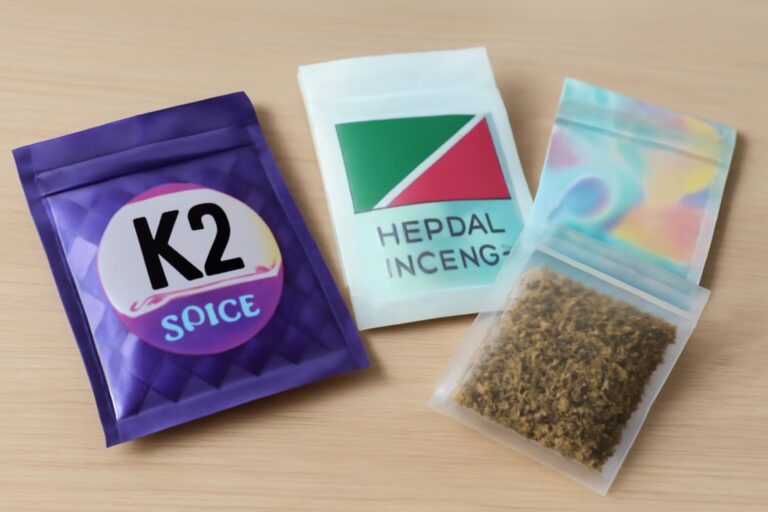
Recent K2 retail enforcement actions are drawing attention to a problem that is easy to overlook: a product displayed in a store, sold in a sealed package, or described as “herbal incense” is not necessarily legal, accurately labeled, or safe.
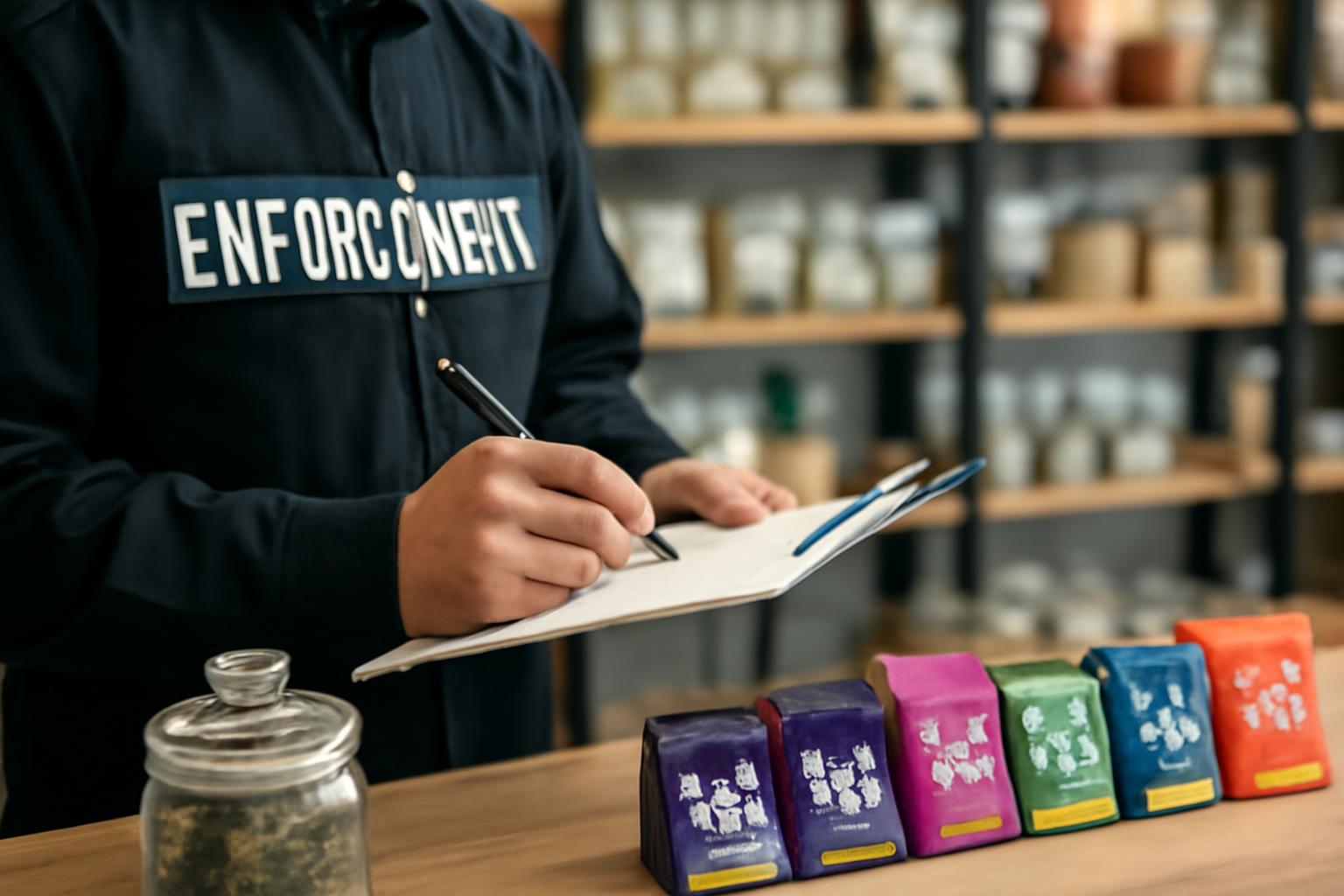
In November 2026, reports from Oneida County described businesses facing hundreds of thousands of dollars in fines over illegal, unregulated products. The cases are part of a broader enforcement trend involving smoke shops, convenience stores, and other retailers that sell products marketed as legal highs or alternatives to cannabis.
These actions matter beyond the businesses involved. They show why consumers should treat K2 and Spice products as high-risk substances rather than ordinary herbal products. Synthetic cannabinoids can vary widely from one package or batch to another, and familiar branding does not guarantee consistent ingredients or strength.
This guide explains what K2 retail enforcement means, why “legal” language can be misleading, and what people should do when they encounter a suspicious product or possible exposure.
What K2 retail enforcement means
K2 retail enforcement refers to actions taken by local, state, or federal authorities against the sale, possession, advertising, or distribution of products containing prohibited or undisclosed substances. Enforcement may include inspections, product seizures, civil fines, license action, criminal charges, or referrals to public-health agencies.
The term K2 is commonly used for synthetic cannabinoid products, also called Spice or synthetic marijuana. These substances are manufactured chemicals designed to interact with cannabinoid receptors in the brain. They are not the same as cannabis, and the effects may be much less predictable.
Retail enforcement can target several issues at once:
- Products containing controlled synthetic cannabinoids
- Misleading claims that a product is “natural,” “legal,” or “not for human consumption”
- Packaging that resembles candy, snacks, or ordinary consumer goods
- Missing or inaccurate ingredient information
- Sales to minors or sales in violation of local licensing rules
- Products containing undisclosed stimulants, sedatives, or other drugs
A fine or seizure does not necessarily mean every product sold by a business contained the same chemical. It does mean regulators identified conduct or products serious enough to warrant intervention. Consumers should not interpret retail availability as government approval.
Why “legal high” labeling does not establish safety
Many synthetic cannabinoid products have historically been marketed under labels such as herbal incense, potpourri, research material, or legal high. Those descriptions are often designed to separate the product from its actual intended use. A disclaimer such as “not for human consumption” does not make inhaling, ingesting, or otherwise using the product safe.
Drug schedules and product rules can also change quickly. A compound may be prohibited under federal law, restricted by a state, or covered by a broader law that addresses chemical analogues. Some jurisdictions also regulate products based on their intended use, advertising, packaging, or cannabinoid content.
That creates a dangerous misunderstanding: a product may be visible on a shelf or listed online while still violating local law. Retailers may also continue selling inventory until an inspection, complaint, laboratory result, or enforcement action brings it to authorities’ attention.
For a broader explanation of the difference between product marketing and actual risk, readers can review what K2 is and how to stay safer around it.
Why synthetic cannabinoid products are difficult to evaluate
Labels may not match contents
Unlike regulated medicines, many illicit or unregulated synthetic cannabinoid products do not pass through a reliable manufacturing and quality-control system. The label may omit the active compound, list an outdated chemical, or provide no meaningful information about concentration.
Even when a package names a particular compound, the contents may have changed because manufacturers alter formulas to avoid restrictions or respond to supply conditions. Two packages with identical branding can therefore produce different effects and different health risks.
Potency can be uneven
Sprayed plant material, paper, liquid products, and other delivery formats may not distribute chemicals evenly. One portion can contain substantially more active substance than another. This is especially concerning when people assume that a small amount is automatically low risk.
Contamination is possible
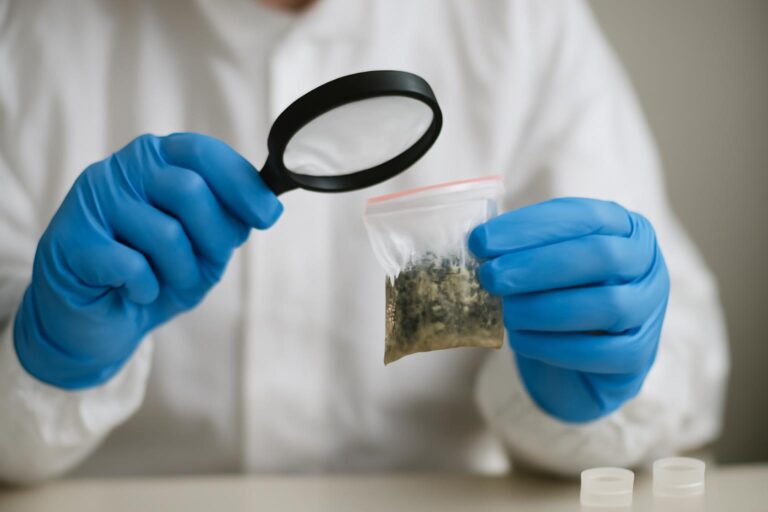
Unregulated products may contain residual solvents, unexpected psychoactive compounds, heavy metals, microbes, or other contaminants. A pleasant smell, attractive packaging, or professional-looking website cannot rule out contamination. Visual inspection is not a substitute for validated laboratory analysis.
What recent fines reveal about the retail supply chain
County-level fines reveal that K2 distribution is not limited to anonymous online sellers or isolated street transactions. Products can move through ordinary commercial channels, including businesses that also sell tobacco products, smoking accessories, rolling papers, or conventional herbal merchandise.
That proximity can blur important distinctions. A customer may assume that all products in a headshop are subject to the same safety standards. In reality, accessories such as glassware or rolling papers are different from chemical products marketed for inhalation. A store’s legitimate merchandise does not validate every product on its shelves.
Enforcement also shows why local action matters. Federal and state rules may establish broad restrictions, but counties and municipalities can investigate complaints, inspect retailers, impose local penalties, and coordinate with health departments. This patchwork means that a product available in one location may be prohibited in another.
Businesses that sell or distribute questionable products may face more than a fine. They can experience inventory loss, reputational damage, payment-processing problems, licensing consequences, and criminal investigation. Retailers should obtain independent legal and regulatory advice before handling any product described as K2, Spice, synthetic cannabis, or a research chemical.
Warning signs of an unregulated K2 product
No single warning sign proves what is inside a package. However, several features should prompt caution:
- Claims that the product is “stronger than cannabis” or produces an intense effect
- Vague ingredient language such as “proprietary blend” or “proprietary cannabinoid”
- No manufacturer address, lot number, date, or verifiable contact information
- Packaging that says “not for human consumption” while clearly describing an intoxicating effect
- Promises of being undetectable, legal in every state, or exempt from drug laws
- Instructions involving spraying, soaking, dissolving, heating, or applying a chemical to another material
- Marketing aimed at teenagers or designed to resemble food, drinks, or candy
- Large differences in color, odor, texture, or claimed potency between packages
These signs should not be used to identify a “safe” product. They are reasons to avoid contact and seek accurate information.
What to do if you find a suspicious product
Do not taste, smoke, vape, burn, or handle an unknown K2 product unnecessarily. Keep it away from children, pets, food, and heat. Do not attempt to test it at home, mix it with another substance, or transfer it into a different container.
If the product is in a business, consumers can leave the area and report concerns to the local health department, consumer-protection office, or law-enforcement agency. Preserve the receipt, product photographs, and packaging information only if doing so can be done safely. Avoid opening the package or mailing it without instructions from an appropriate authority.
If someone has already used or touched a suspected synthetic cannabinoid, monitor them closely. Serious symptoms can include severe agitation, confusion, hallucinations, chest pain, rapid heartbeat, seizures, trouble breathing, loss of consciousness, or extreme drowsiness. Call 911 for an emergency. In the United States, Poison Control can also provide immediate guidance at 1-800-222-1222.
Tell medical professionals exactly what was taken, when it was taken, and whether alcohol, cannabis, prescription drugs, opioids, stimulants, or other substances were involved. Do not delay emergency care because the package claims the contents are herbal or legal.
How consumers can assess information more responsibly
Reliable evaluation starts with skepticism. Product reviews can describe packaging, shipping, or customer service, but they generally cannot confirm the identity and concentration of an undisclosed chemical. A positive experience from one person also cannot predict how another person will respond.
Consumers should distinguish between a certificate from an independent laboratory and a generic image labeled “lab tested.” A meaningful report should identify the tested sample, laboratory, testing method, date, and detected compounds. Even then, a report may apply only to one batch and may not establish that the product is legal in a particular state.
For general site information and product-policy context, readers can visit the Insense High homepage. Reviews and retailer experiences should be considered separately from medical, toxicological, and legal advice; the site’s reviews section may provide context about customer perspectives but cannot verify the safety of synthetic cannabinoids.
What retailers should learn from county enforcement
Retailers should not rely on a supplier’s statement that a product is legal. Before stocking any cannabinoid or research-chemical product, businesses should verify applicable federal, state, and local rules, confirm age restrictions, review labeling requirements, and obtain documentation from qualified legal and compliance professionals.
They should also maintain supplier records, batch information, recall procedures, and staff training. Products with unclear ingredients, intoxicating claims, or inconsistent documentation should not be treated like ordinary incense or accessories.
Most importantly, a disclaimer is not a compliance program. Calling a product “potpourri” does not resolve issues involving chemical identity, intended use, consumer exposure, or local law.
Frequently asked questions
Are K2 and Spice the same as cannabis?
No. K2 and Spice generally refer to manufactured synthetic cannabinoids. They can act differently from cannabis and may cause more severe or unpredictable effects. Branding that uses cannabis imagery does not establish that a product contains cannabis.
Does a store selling K2 mean the product is legal?
No. Retail availability is not proof of legality or safety. Products may be sold before an inspection, may violate local rules, or may contain a chemical that is prohibited under state or federal law.
Can smell or appearance identify synthetic cannabinoids?
No. Color, texture, packaging, and odor cannot reliably identify the active chemical or its concentration. Unknown products should not be sampled or tested informally.
What should I do if someone develops symptoms after using K2?
Call 911 for severe symptoms such as seizures, breathing problems, chest pain, extreme confusion, or loss of consciousness. For poisoning questions in the United States, contact Poison Control at 1-800-222-1222. Share the packaging with clinicians if it can be done safely, but do not delay treatment while searching for more information.
The practical takeaway
Recent K2 retail enforcement actions demonstrate that unregulated synthetic cannabinoids remain a consumer-safety and compliance issue, not merely a question of product branding. Fines, seizures, and investigations can remove products from one market, but they do not eliminate the underlying risks created by undisclosed chemicals and inconsistent manufacturing.
The safest approach is to avoid unknown synthetic cannabinoid products, treat “legal high” claims with caution, and seek professional help after suspected exposure. Retailers should verify every applicable rule before selling intoxicating or chemical products, while consumers should never mistake a sealed package or familiar label for proof of safety.