Synthetic Cannabinoid Detection Challenges: What New Forensic Training Means for K2 Safety
Synthetic Cannabinoid Detection Challenges and K2 Safety
Why Synthetic Cannabinoids Are Difficult to Detect
- Rapidly Shifting Structures: When a specific synthetic cannabinoid is banned, illicit laboratories slightly modify its molecular structure. This creates a brand-new compound that is technically legal but carries unknown and often more potent effects.
- Standard Drug Screen Limitations: Routine hospital and workplace urine drug screens (like 5-panel or 10-panel tests) look for specific natural cannabis metabolites (THC). They do not detect synthetic cannabinoids.
- Advanced Testing Delays: Detecting these substances requires specialized laboratory equipment, such as Gas Chromatography-Mass Spectrometry (GC-MS) or Liquid Chromatography-Mass Spectrometry (LC-MS). Because new variants emerge constantly, reference laboratories must continuously update their chemical libraries to keep up.
K2 Safety and Health Risks
- Severe Physical Symptoms: Users can experience rapid heart rate (tachycardia), severe hypertension, acute kidney injury, seizures, and violent vomiting.
- Acute Psychiatric Effects: Poisonings frequently cause extreme anxiety, severe paranoia, hallucinations, and intense agitation or unprovoked aggression.
- Overdose and Contamination Risks: Because these chemicals are sprayed onto dried plant matter in unregulated environments, “hot spots” occur where one portion of a batch contains a lethal dose. Additionally, some batches have been found contaminated with other dangerous substances, such as long-acting anticoagulant rodenticides (brodifacoum), causing severe internal bleeding.
Emergency Response and Management
- Airway and Breathing: Ensuring the patient can breathe adequately.
- Cardiovascular Monitoring: Managing dangerously high blood pressure and heart rates.
- Sedation: Utilizing medications like benzodiazepines under direct medical supervision to manage severe agitation, anxiety, or seizures.
Important safety note: Synthetic cannabinoids sold as K2, Spice, fake weed, herbal incense, or legal highs are not safe alternatives to cannabis. Their contents and potency can be unpredictable, and products marketed under the same name may contain entirely different chemicals. This article is educational and does not encourage possession, use, manufacture, or distribution.
A recent live news signal reports that Uzbekistan hosted training focused on detecting synthetic drugs in forensic laboratories. Although the headline concerns an international training effort rather than a new U.S. policy, it points to an issue with direct relevance in the United States: synthetic cannabinoid detection challenges remain significant because the compounds found in K2 products can change quickly and may not appear on routine drug screens.
For consumers, families, educators, and retailers, the practical lesson is simple. A colorful package, familiar brand name, “not for human consumption” disclaimer, or claim of legality cannot establish what a product contains or how the body will react to it.
Why synthetic cannabinoid detection is difficult
Synthetic cannabinoids are laboratory-made chemicals designed to interact with cannabinoid receptors. They are not one single substance. The term covers a broad and continually changing group of compounds, including chemicals that may differ substantially in strength, duration, and toxicity.
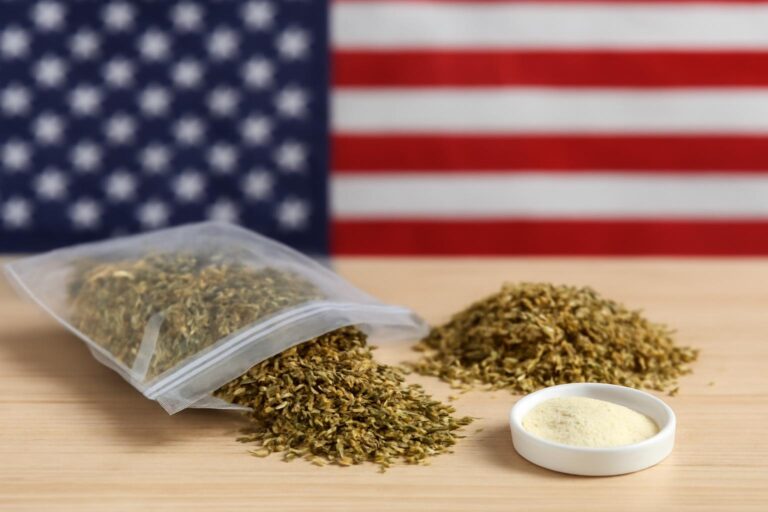
Manufacturers or distributors may apply these chemicals to dried plant material, paper, powders, liquids, or other carrier products. Packaging may use names such as K2, Spice, herbal incense, potpourri, or research chemicals. However, the label often provides little reliable information about the actual active ingredient, concentration, or contamination profile.
When authorities identify one compound and add it to a controlled-substance list, suppliers may attempt to replace it with a chemically related substance. This process, sometimes called “chemical substitution,” creates a moving target for laboratories and regulators. A test designed for yesterday’s compound may not detect today’s formulation.
One brand name does not mean one formulation
Traditional medicines and regulated products generally have defined ingredients and manufacturing controls. Illicit or unregulated synthetic cannabinoid products may not follow that model. Two packages carrying the same product name can contain different chemicals, while two products with different names may contain the same active compound.
This inconsistency is one reason consumer reviews are limited as a safety tool. A person may describe a particular bag as mild or manageable, but the next batch could have a different concentration or active ingredient. A review can describe an individual experience; it cannot verify identity, purity, or future batch safety.
What forensic laboratories are trying to identify
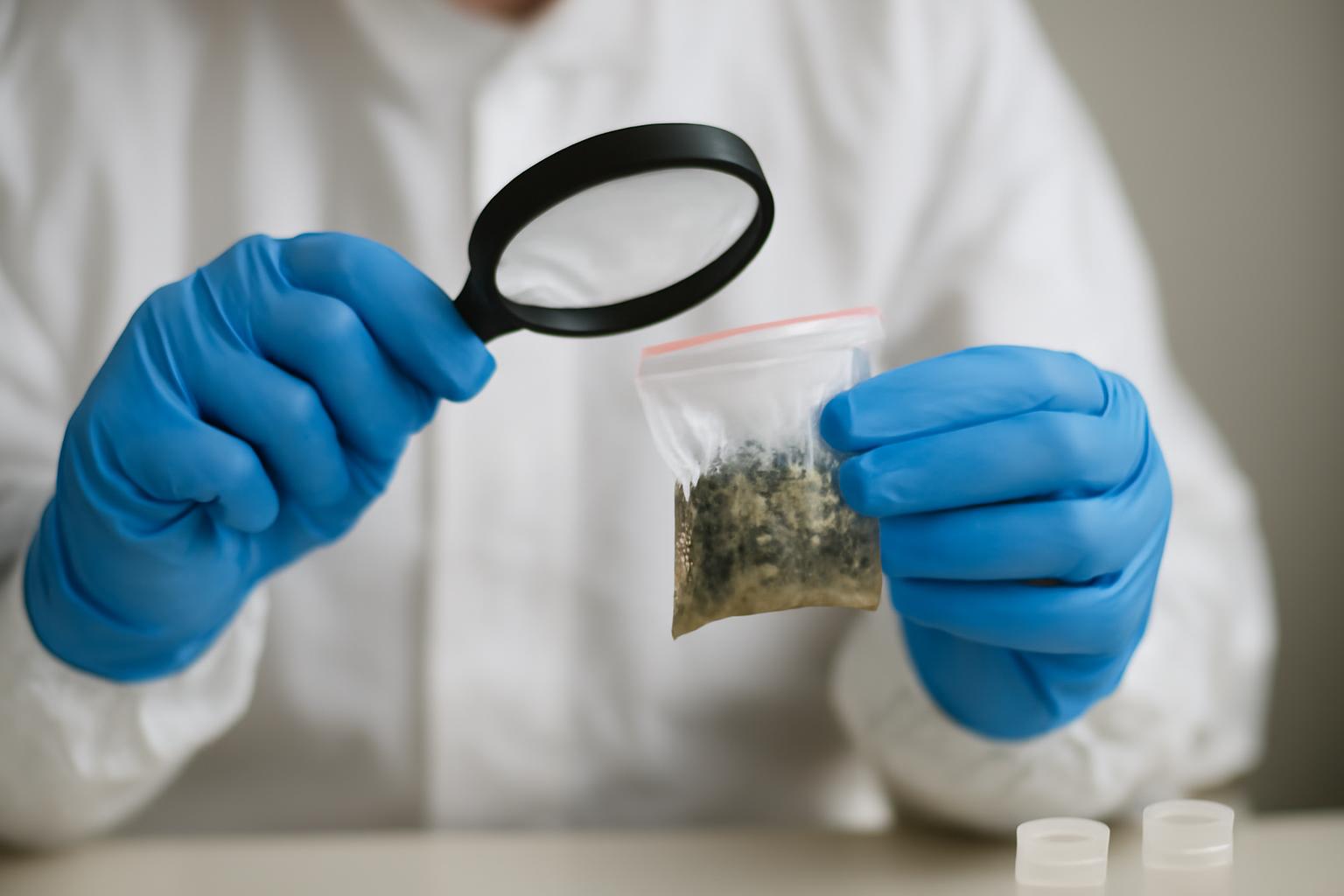
Forensic drug detection involves more than asking whether a sample is “K2.” Laboratories may need to determine which specific compound is present, whether multiple compounds are combined, and whether the material contains adulterants, solvents, pesticides, heavy metals, or other contaminants.
Modern laboratories may use techniques such as chromatography and mass spectrometry to separate and identify chemicals. These tools can provide valuable information, but they require reference materials, validated methods, trained analysts, and sufficient sample quality. A complex or degraded sample can make interpretation more difficult.
Training programs are important because laboratory staff must keep up with new compounds, evolving terminology, unusual mixtures, and emerging patterns in seized materials. They also help improve communication between police departments, toxicology laboratories, hospitals, poison centers, and public-health agencies.
Detection is not the same as safety
Finding a chemical in a sample does not automatically explain the dose that caused an illness or predict how another batch will behave. Some compounds may be active at very small amounts, and uneven application to plant material or paper can create “hot spots.” A small piece from one area may contain much more active material than a similar-looking piece from another area.
Laboratory testing also has limits. A negative result for a familiar synthetic cannabinoid does not prove that a sample is harmless. It may mean that the laboratory was not testing for the relevant compound, that the concentration was below the method’s detection limit, or that the sample contained a newer substance.
Why routine drug tests may miss K2 and Spice
Standard workplace or clinical drug panels are usually designed to detect specific drug classes or metabolites. They commonly focus on substances such as cannabis metabolites, cocaine, opioids, amphetamines, or benzodiazepines. Synthetic cannabinoids are structurally diverse, and many do not produce the same metabolites as plant-derived THC.
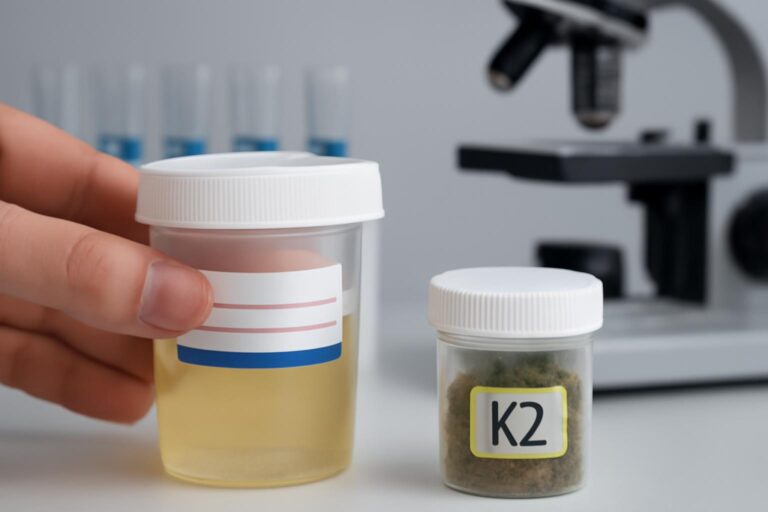
Specialized testing may detect selected synthetic cannabinoid metabolites, but these tests are not universally available, may be expensive, and can quickly become outdated as new compounds appear. A routine negative result should therefore not be interpreted as proof that someone was not exposed to a synthetic cannabinoid.
Healthcare professionals generally diagnose exposure using the person’s symptoms, medical history, observed materials, and available toxicology information. If someone becomes ill after using an unknown product, it is important to tell emergency clinicians exactly what was taken, when it was taken, and how it was used. Do not delay emergency care while trying to identify the product independently.
Health risks associated with synthetic cannabinoids
Synthetic cannabinoid effects can vary widely. Reported reactions may include severe anxiety, agitation, confusion, hallucinations, vomiting, rapid heart rate, high blood pressure, chest pain, seizures, loss of consciousness, kidney problems, and dangerous changes in body temperature. Some people experience extreme sleepiness or become difficult to awaken.
The risk is increased by unknown potency, repeated dosing, mixing substances, and using a product alone. Alcohol, prescription medicines, stimulants, opioids, and other drugs can complicate the reaction and make it harder to identify the cause of symptoms.
Call 911 immediately for trouble breathing, chest pain, a seizure, severe confusion, collapse, blue or gray lips, uncontrolled agitation, or unresponsiveness. Place an unconscious but breathing person on their side, avoid forcing food or liquid, and do not attempt to make them vomit. In the United States, Poison Control can be reached at 1-800-222-1222 for guidance, while life-threatening symptoms require emergency services.
What U.S. consumers should understand about labels and legality
Terms such as “herbal,” “natural,” “legal high,” and “research chemical” do not establish that a product is safe or lawful. A disclaimer stating “not for human consumption” is not a toxicology report, and it does not protect a person from health consequences or legal exposure.
U.S. laws can differ by state, and federal or state controlled-substance rules may apply to specific compounds, analogs, mixtures, or intended uses. Enforcement and scheduling can also change. A product advertised online as legal in one location may be prohibited in another, and shipping across state lines can create additional legal concerns.
Consumers looking for background information should treat an online store’s category labels and marketing claims as commercial content, not independent verification. The Insense High homepage contains the site’s broader product and educational context, while the site’s category index can help readers understand how topics are organized. Neither a product listing nor a category name can confirm chemical identity, purity, or legality.
How better detection supports public health
Improved forensic training can produce benefits beyond criminal investigations. When laboratories identify a new synthetic cannabinoid, public-health agencies may be able to issue more accurate alerts, hospitals may recognize patterns sooner, and policymakers may respond with better-targeted information.
Data sharing is especially important. A single emergency department may see only a few unusual cases, while a regional poison center or forensic laboratory may identify a broader pattern. Coordinated reporting can help connect clinical symptoms with laboratory findings and geographic distribution.
Still, public warnings must be communicated carefully. Naming a product or compound can help people recognize danger, but sensational descriptions may unintentionally increase curiosity. Effective messaging should explain uncertainty, describe warning signs, discourage use, and provide clear steps for getting medical help.
What responsible information looks like
- It distinguishes synthetic cannabinoids from cannabis and hemp-derived products.
- It explains that product names and packaging are unreliable indicators of contents.
- It avoids instructions for making, spraying, modifying, or consuming K2 products.
- It acknowledges that routine drug tests may not detect every compound.
- It provides practical emergency guidance without blaming people who need help.
Readers researching related topics can also review the site’s post index for existing educational discussions. Because product formulations and laws change, older online articles should be treated as background rather than a substitute for current medical, legal, or public-health guidance.
Safer decisions when an unknown product is present
The safest choice is not to use an unknown synthetic cannabinoid product. Do not rely on smell, color, package design, a friend’s experience, or a seller’s statement to estimate potency. Do not combine an unknown product with alcohol or other drugs, and do not drive after exposure.
If a product is already in a home, keep it away from children and pets, avoid opening or handling leaking containers, and follow local hazardous-waste or public-health guidance for disposal. Do not give the material to another person or attempt to dilute, dry, spray, or repackage it.
People who use synthetic cannabinoids repeatedly and want to stop may experience difficult symptoms or strong cravings. A healthcare professional, substance-use counselor, or local treatment service can help create an appropriate plan. Sudden changes in mental status, severe physical symptoms, or suicidal thoughts require immediate professional attention.
Frequently asked questions
Are synthetic cannabinoids the same as marijuana?
No. Synthetic cannabinoids are laboratory-made chemicals that may activate cannabinoid receptors but can behave very differently from THC in cannabis. Their effects, duration, potency, and health risks are often unpredictable.
Can forensic testing identify every K2 compound?
No. Laboratories can identify many compounds when they have suitable methods and reference materials, but new or modified chemicals may not be included in existing test panels. A negative result does not prove a product is safe.
Will a regular drug test detect Spice?
Often it will not. Standard panels typically do not cover the full range of synthetic cannabinoid compounds or their metabolites. Specialized testing may be available for selected substances, but availability and coverage vary.
Does “not for human consumption” make a product safe?
No. That wording is a marketing or legal disclaimer, not evidence of safety. It does not confirm ingredients, purity, dose, or compliance with local law.
What should I do if someone becomes sick after using K2?
Call 911 for severe or life-threatening symptoms, including seizures, chest pain, breathing problems, collapse, or unresponsiveness. Provide clinicians with the product packaging if it can be done safely, and contact Poison Control at 1-800-222-1222 for additional guidance.
The bottom line
International training on synthetic drug detection underscores a continuing reality: K2 and Spice products are difficult to identify because their chemistry can change faster than testing systems and public information. For U.S. consumers, the most reliable safety message is to avoid unknown synthetic cannabinoid products, treat labels and legality claims cautiously, and seek urgent medical help when serious symptoms appear.