Hemp Product Ban 2026: Why New THC Rules Still Don’t Make K2 or Spice Safer
Hemp Product Ban 2026: The Headlines and the Hidden Risk
In November 2026, the first phase of a renewed federal hemp product ban took effect across the United States. News outlets reported that hemp products containing “unnatural cannabinoids” — including THC-O — are now federally prohibited, and several states moved quickly to align their own rules. For anyone who follows cannabis and hemp policy, this is a major shift. But for anyone concerned about K2, Spice, and other synthetic cannabinoids, the more important question is what the ban does not change.
The short answer: the hemp product ban 2026 does not make synthetic cannabinoids safer, legal, or easier to identify. In fact, policy confusion around hemp and synthetic drugs can create new risks. This guide explains what the rule covers, how synthetic cannabinoids differ from hemp-derived compounds, and what U.S. consumers should understand before assuming any product is safe because it sits near a legal category.
What the 2026 Hemp Product Ban Actually Covers
The renewed federal framework focuses on hemp-derived cannabinoids that do not occur naturally in the cannabis plant or that are produced through chemical conversion. THC-O is the most widely cited example, but the rule’s language is broad enough to reach other semi-synthetic and converted cannabinoids. The intent is to close what regulators describe as loopholes in the 2018 farm bill framework.
Several states have already begun enforcing their own versions of the ban. Reporting from NPR and local outlets in late 2026 described hemp businesses preparing for layoffs, store closures, and product removals. In some states, the first phase took effect in November, with deeper restrictions scheduled for December. The result is a patchwork of rules that vary by state and, in some cases, by product type.
Key points about the ban
- Target: Hemp-derived cannabinoids that are chemically converted or not naturally occurring, such as THC-O.
- Scope: Federal prohibition of certain products, with state-level enforcement and additional restrictions.
- Timeline: First phase effective November 2026; further deadlines in some states in December 2026.
- Not covered: Synthetic cannabinoids such as K2 and Spice, which are already controlled substances and are not hemp-derived.
That last point matters. K2 and Spice are not hemp products. They are synthetic cannabinoids — laboratory-made chemicals designed to mimic the effects of THC but with far greater potency and unpredictable toxicity. The hemp product ban 2026 does not legalize them, regulate them as consumer products, or make them safer. It simply does not address them.
Why Synthetic Cannabinoids Are a Different Category Entirely
It is easy to conflate hemp-derived cannabinoids, cannabis, and synthetic cannabinoids because the marketing language overlaps. In practice, they are distinct categories with different chemistry, legal status, and risk profiles.
Hemp-derived cannabinoids
These are compounds extracted from hemp or produced through controlled conversion processes. Examples include CBD, CBG, and, until recently, converted cannabinoids such as THC-O. The 2026 ban targets the converted and unnatural subset. Even where legal, these products are subject to labeling, testing, and dosage considerations.
Synthetic cannabinoids (K2, Spice, fake weed)
Synthetic cannabinoids are not derived from the cannabis plant. They are manufactured chemicals that bind to cannabinoid receptors in the body, often with much higher potency than THC. Common names include K2, Spice, fake weed, and herbal incense. The chemical composition changes frequently, which makes dosing unpredictable and detection difficult.
For a deeper explanation of how these chemicals work and why they are so hazardous, see our guide on what chemicals are in synthetic K2. The key takeaway is that synthetic cannabinoids are not a milder or cheaper version of cannabis. They are a separate class of drugs with a well-documented history of severe health effects.
What the Ban Means for K2 and Spice Availability
One of the most common misconceptions is that tightening hemp rules will reduce demand for synthetic cannabinoids or make them less available. In practice, the opposite can happen. When legal hemp-derived products disappear from shelves, some consumers may look for alternatives in unregulated markets. That is exactly where K2 and Spice circulate.
Public health researchers have long noted that synthetic cannabinoid use tends to rise when other options are restricted or when users perceive legal products as unavailable or too expensive. The 2026 hemp product ban may unintentionally push some of that demand toward illicit synthetic products, which are far more dangerous than the hemp-derived compounds being banned.
This is not a reason to oppose regulation. It is a reason to be clear about what regulation can and cannot do. Removing THC-O from legal commerce does not remove K2 from illicit commerce. Consumers who assume that a product is safe because it is sold near legal hemp products, or because it is marketed as “herbal incense,” are taking a significant risk.
Health Risks of K2 and Spice That the Ban Does Not Address
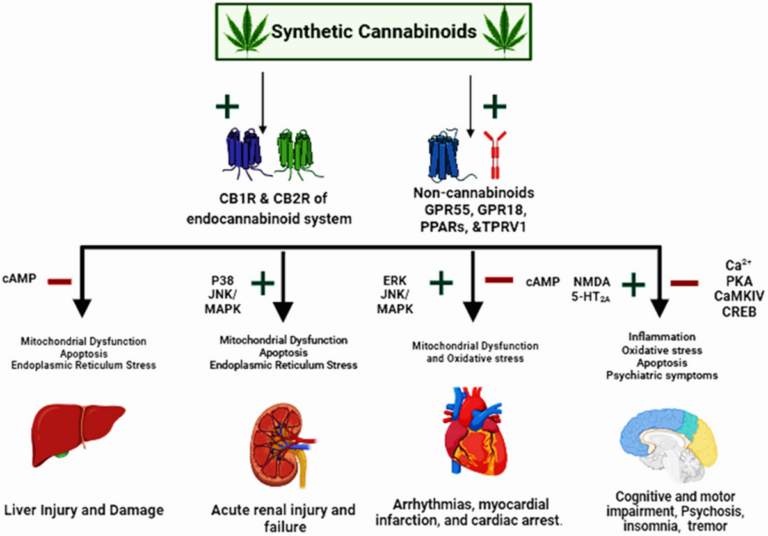
The health risks associated with synthetic cannabinoids are well documented and have not changed with the hemp policy landscape. They include:
- Severe agitation and psychosis: Synthetic cannabinoids can trigger acute psychiatric symptoms, including paranoia, hallucinations, and violent behavior.
- Cardiovascular effects: Rapid heart rate, chest pain, and in some cases cardiac events have been reported.
- Seizures: Convulsions are a recognized complication of synthetic cannabinoid toxicity.
- Kidney injury: Outbreaks of acute kidney injury have been linked to specific synthetic cannabinoid products.
- Dependence and withdrawal: Regular use can lead to dependence, with withdrawal symptoms that include anxiety, irritability, and insomnia.
These risks are compounded by inconsistent potency. Because synthetic cannabinoid products are made in unregulated settings, the amount of active chemical in a given batch can vary widely. A product that produced mild effects last week may produce a medical emergency this week. For a closer look at how batch variability affects risk, see our article on emerging synthetic cannabinoid health risks.
Policy Confusion: Why “Legal” and “Safe” Are Not the Same
The 2026 hemp product ban has generated a great deal of confusion. Some consumers have interpreted the ban as proof that all hemp-derived products are dangerous, while others have assumed that anything still on shelves must be safe. Neither conclusion is accurate.
Legal status is a regulatory question. Safety is a toxicological and clinical question. A product can be legal and still carry risks, especially if it is poorly labeled or inconsistently dosed. A product can be illegal and still be widely available, especially in illicit markets. The hemp product ban 2026 changes the legal landscape for certain hemp-derived cannabinoids, but it does not change the fundamental risks of synthetic cannabinoids.
For a broader discussion of how policy shifts can create false confidence, see our analysis of K2 and cannabis policy confusion. The pattern is consistent: when rules change, marketing language adapts faster than consumer understanding.
How to Tell the Difference: Practical Guidance for U.S. Consumers
If you are trying to understand what is in a product, the label is not always reliable. That is especially true in unregulated markets. Still, there are practical steps you can take to reduce risk.
1. Know the category
Hemp-derived cannabinoids, cannabis products, and synthetic cannabinoids are different categories. If a product is marketed as “herbal incense,” “potpourri,” or “research chemical,” treat it with caution. These terms have historically been used to market synthetic cannabinoids.
2. Look for testing and transparency
Reputable hemp-derived products typically include batch testing, clear labeling, and dosage information. Synthetic cannabinoid products rarely do. If a product’s label is vague or makes exaggerated claims, that is a warning sign.
3. Be skeptical of “legal high” marketing
The term “legal high” is a marketing phrase, not a safety guarantee. Many substances marketed this way have been banned or restricted after being linked to serious health harms. For more on this pattern, see our article on what K2 is and how to stay safe.
4. Understand that detection is difficult
Synthetic cannabinoids are not reliably identifiable by smell, appearance, or taste. Field tests and standard drug screens may not detect newer compounds. This makes accidental exposure and dosing errors more likely.
What Comes Next: Enforcement, State Rules, and Consumer Awareness
The hemp product ban 2026 is not a single event. It is a process. Federal agencies are expected to issue further guidance, and states will continue to adjust their own rules. Some states have already moved faster than others, creating a patchwork that will persist into 2027.
For consumers, the practical implications are twofold. First, the legal hemp market will look different. Some products will disappear, and others will be reformulated or relabeled. Second, the illicit market for synthetic cannabinoids will not disappear. If anything, policy changes can create new opportunities for bad actors who exploit confusion.
The most reliable protection is education. Understanding the difference between hemp-derived cannabinoids and synthetic cannabinoids, recognizing the warning signs of unregulated products, and staying current on state-level rules are all part of reducing risk. For a closer look at how regulation and safety interact, see our analysis of K2 and hemp regulation in 2026.
Frequently Asked Questions
Does the 2026 hemp product ban make K2 legal?
No. K2 and Spice are synthetic cannabinoids, not hemp-derived products. They are already controlled substances under federal law and are not affected by the hemp product ban in any way that would make them legal.
Is THC-O the same as K2?
No. THC-O is a semi-synthetic cannabinoid derived from hemp. K2 and Spice are synthetic cannabinoids made from laboratory chemicals that are not derived from the cannabis plant. They have different chemistry, different legal status, and different risk profiles.
Why are synthetic cannabinoids more dangerous than hemp-derived products?
Synthetic cannabinoids are often far more potent than THC, and their composition varies unpredictably from batch to batch. This makes dosing unreliable and increases the risk of severe effects such as psychosis, seizures, and cardiovascular events.
Can I tell if a product contains synthetic cannabinoids by looking at it?
No. Synthetic cannabinoids are not reliably identifiable by appearance, smell, or taste. Products marketed as herbal incense or potpourri may contain synthetic cannabinoids, and the only reliable way to know is through laboratory testing.
Will the hemp ban reduce K2 availability?
There is no strong evidence that hemp regulation reduces synthetic cannabinoid availability. In some cases, restricting legal alternatives can push demand toward illicit markets, where synthetic cannabinoids are more common.
What should I do if I think someone has been exposed to K2 or Spice?
Seek emergency medical help immediately. Call 911 or your local emergency number. Do not wait for symptoms to worsen. Provide as much information as possible about the product and the time of exposure to help medical responders.
The Bottom Line
The hemp product ban 2026 is a significant regulatory change for the U.S. hemp market. It targets unnatural cannabinoids such as THC-O and will reshape what is legally available in many states. But it does not make K2 or Spice safer, and it does not remove synthetic cannabinoids from illicit markets. Consumers who understand the difference between hemp-derived products and synthetic cannabinoids are better positioned to make informed decisions and avoid the serious health risks associated with fake weed.
If you are researching cannabinoids, whether for general education or product awareness, stay focused on verified information, clear labeling, and the distinction between legal status and safety. Those distinctions matter more than ever in a shifting regulatory environment.