K2 and Cannabis Policy Confusion: Why Changing THC Rules Do Not Make Synthetic Cannabinoids Safer
K2 and cannabis policy confusion! Recent cannabis policy headlines are creating a dangerous misunderstanding: changes involving hemp-derived THC or recreational marijuana do not make K2, Spice, or other synthetic cannabinoids safer, legal, or equivalent to cannabis.
News coverage about businesses continuing to sell THC products despite proposed federal hemp restrictions, along with reports about voters maintaining recreational marijuana access in Massachusetts, reflects an evolving cannabis market. But K2 belongs to a different category.
That distinction matters for consumers, families, retailers, and anyone trying to interpret a package or a news headline. A changing cannabis market can increase confusion, but it does not remove the unpredictable chemistry and serious health risks associated with synthetic cannabinoid products.
Why cannabis policy headlines can be misleading
In the United States, cannabis policy is divided among federal law, state statutes, local rules, and agency enforcement. Hemp-derived products may be treated differently from marijuana, while states may create their own restrictions on intoxicating cannabinoids. These overlapping rules can change quickly and may use technical definitions that are difficult for the public to interpret.
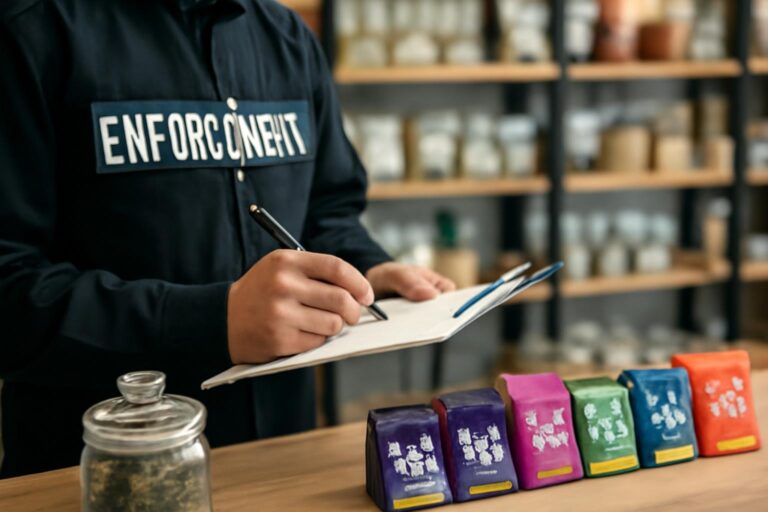
K2 is frequently pull into these discussions because sellers may use terms such as “herbal incense,” “potpourri,” “legal high,” or “not for human consumption.” Those descriptions do not establish what a product contains or whether it is lawful in a particular state. They are often marketing or labeling language rather than a reliable safety classification.
The most important point is simple: legal status is not a safety guarantee. A product that sell briefly, advertise online, or describes as compliant while still containing an undisclose synthetic cannabinoid or another hazardous compound.
K2 is not the same as marijuana or hemp-derived THC
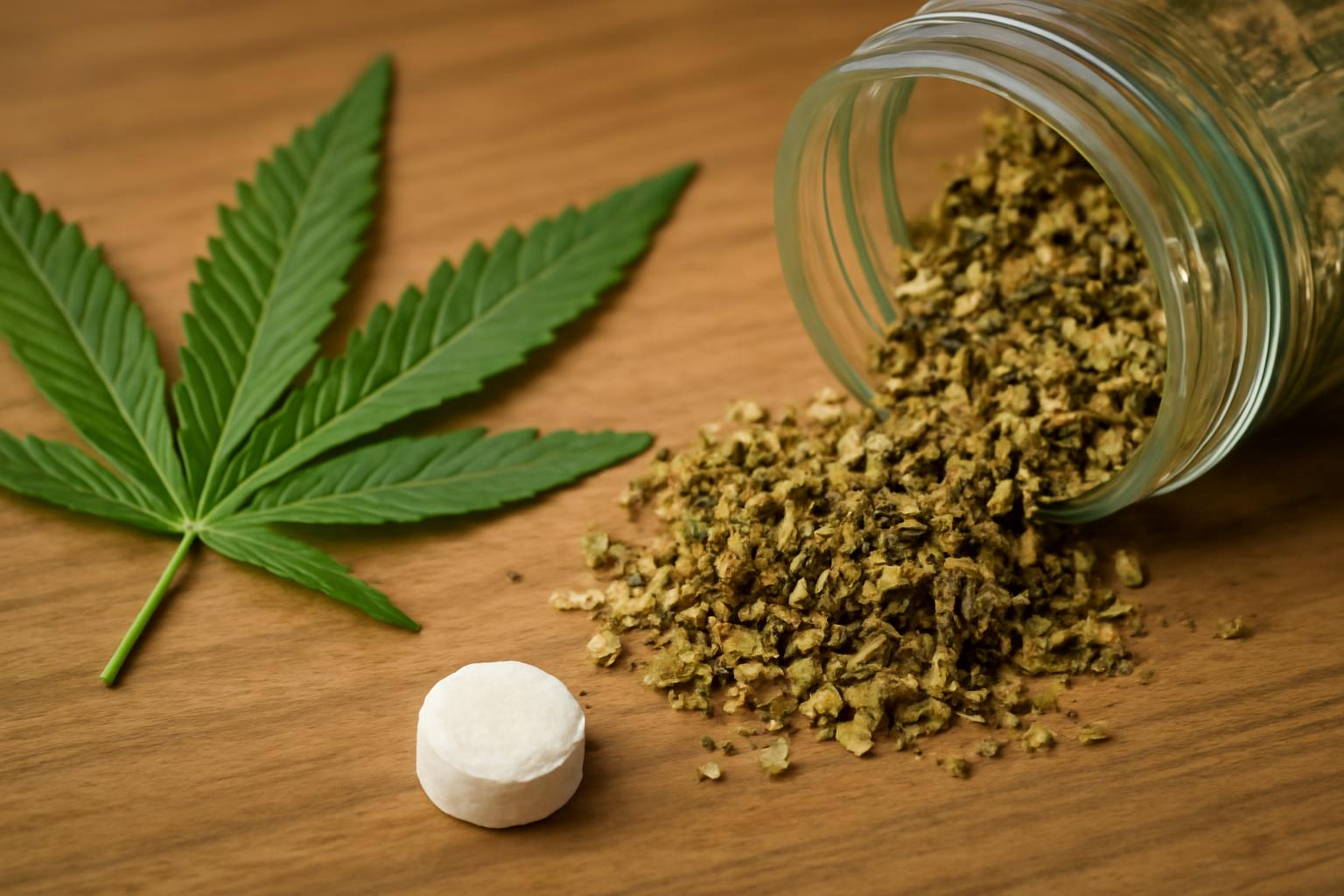
Traditional cannabis contains naturally occurring cannabinoids, including THC and CBD, along with other plant compounds. Hemp-derived THC products may use cannabinoids extracted or converted from hemp, although their legality, manufacturing standards, and intoxicating effects vary by product and jurisdiction.
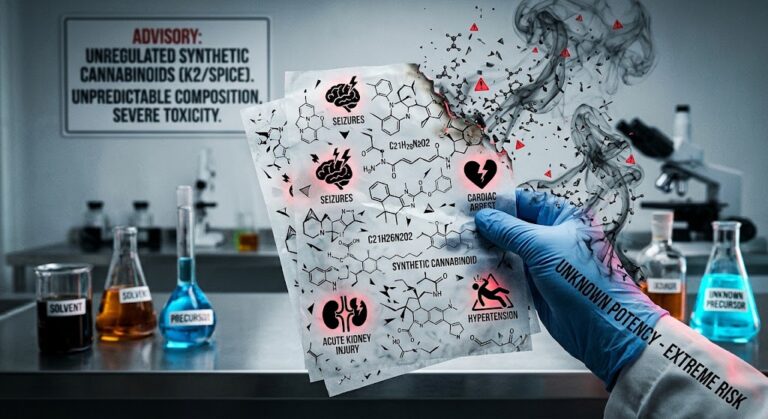
Synthetic cannabinoids are different. They are manufactured chemicals designed to interact with the body’s cannabinoid receptors. Some compounds can activate those receptors more strongly or unpredictably than THC. The formulation may also change without a clear change to the brand name, package artwork, or product description.
This is why comparing K2 with a regulated cannabis product based only on the word “cannabinoid” is misleading. The term describes a broad chemical category, not a uniform level of risk.
Common sources of confusion
- “Cannabis-like” branding: Names and imagery may suggest marijuana even when the active chemical is not cannabis-derived.
- Vague ingredient lists: A package may list herbs, fragrance, or “proprietary” ingredients without naming the active compound.
- Changing formulas: Manufacturers may replace one synthetic cannabinoid with another after a compound attracts regulatory attention.
- Online claims: Words such as “legal,” “natural,” “premium,” or “lab tested” may not be supported by accessible, independent documentation.
- Inconsistent enforcement: A product available in one location may be prohibited, seized, or treated differently elsewhere.
What recent THC market developments do—and do not—tell us about K2
Recent reporting from Wisconsin illustrates how businesses and policymakers are responding to possible federal changes affecting hemp-derived THC products. Separately, Massachusetts voters reportedly rejected an effort to roll back recreational marijuana. These developments may influence the regulated cannabis and hemp markets, but they should not be interpreted as a national approval of synthetic cannabinoids.
Policy debates about THC usually focus on cultivation, possession, retail sales, taxation, product potency, testing, and age restrictions. K2 creates a different regulatory challenge because its chemical identity may be concealed, altered, or absent from the label. A rule written for plant-derived cannabis or hemp products may not adequately describe a sprayed herbal blend or an illicit synthetic cannabinoid mixture.
Consumers should therefore avoid using a cannabis policy headline as a shortcut for judging a K2 product. The relevant questions are instead:
- Is the exact active ingredient disclose?
- Is there independent testing that identifies the compound and screens for contaminants?
- Does the product comply with the law in the state where it is produce?
- Are the health warnings specific and credible?
- Is the product being marketed for inhalation, ingestion, or another form of human use despite a disclaimer saying otherwise?
Why K2 risk can be difficult to predict
Synthetic cannabinoid effects depend on the chemical used, its concentration, the method of administration, the person’s health, and whether other substances are present. Two packages with similar names may contain different compounds or substantially different strengths.
Reported effects can include severe anxiety, agitation, confusion, hallucinations, vomiting, rapid heart rate, chest pain, seizures, loss of consciousness, and dangerous behavior. Some people experience extreme symptoms after a small amount, while others may not recognize the seriousness of their condition until it rapidly worsens. K2 and cannabis policy confusion north Carolina
Contamination adds another layer of uncertainty. Products manufactured or stored outside controlled systems may contain residual solvents, pesticides, heavy metals, microbes, or other drugs. In illicit or poorly documented supply chains, consumers cannot reliably infer safety from color, scent, texture, price, or brand reputation.
For background on the difference between marketing language and actual product risk, readers can review the educational material available through the Insense High home page. Any product information should be treated cautiously when the ingredients, testing, and intended use are unclear.
How changing rules affect consumers and retailers
Consumers may assume availability means approval
A product displayed online or in a storefront may appear legitimate because it has packaging, a barcode, or a professional-looking website. None of those features proves that the contents match the label. Availability can reflect gaps in enforcement, delayed testing, or a seller operating across jurisdictions—not a finding that the product is safe. K2 and cannabis policy confusion in Texas
Retailers face classification and compliance problems
Businesses selling herbal incense, smoking accessories, hemp products, or research chemicals need to understand that product categories can overlap in the public imagination while remaining legally and scientifically distinct. A disclaimer cannot transform an intoxicating product into a non-consumable item, and a familiar brand name cannot substitute for current laboratory documentation.
Responsible retailers should maintain current records for ingredients, suppliers, batch identification, testing, age controls, shipping restrictions, and recalls. They should also avoid claims that imply a synthetic cannabinoid is harmless, equivalent to marijuana, or lawful everywhere in the United States.
Families and educators may misread the language
Parents, teachers, and community workers may see terms such as “herbal,” “incense,” or “hemp” and underestimate the possibility of a potent synthetic drug. Education should focus on behavior and symptoms rather than packaging alone. Sudden confusion, severe agitation, unusual drowsiness, chest symptoms, seizures, or hallucinations require urgent attention regardless of what the package says.
Safer ways to evaluate a questionable product
No visual inspection can confirm that a suspected K2 product is safe. Do not taste, smell closely, burn, vape, or handle an unknown powder or liquid to identify it. Avoid transferring the material to paper, plant matter, food, or a vaping device. Those actions can increase exposure and make an emergency more difficult to assess.
If a product is already in someone’s possession, keep it away from children and pets, avoid unnecessary contact, and preserve the original packaging for medical or public health professionals if exposure occurs. Do not rely on an online product review to determine chemical content.
Consumers comparing information across the site can use the Insense High article archive as a starting point, but older pages may not reflect current laws, formulas, or public health guidance. Product listings should also be viewed through the lens of current state and federal requirements; the product catalog index is not a substitute for independent testing or legal advice.
What to do during a suspected K2 emergency
Call 911 immediately if someone has chest pain, trouble breathing, a seizure, severe agitation, collapse, extreme confusion, or cannot be awakened. Stay with the person if it is safe to do so. Move nearby hazards away, place an unconscious but breathing person on their side, and do not force food, drinks, or other substances.
Tell emergency responders what was taken, when it may have been taken, and whether alcohol, prescription medicines, opioids, stimulants, or other drugs may also be involved. Honest information helps clinicians choose appropriate monitoring and treatment. If the person is not breathing normally, follow the dispatcher’s instructions and use naloxone if opioid exposure is possible; naloxone does not reverse synthetic cannabinoids, but it may help when an opioid is also present. K2 and cannabis policy confusion in new york.
Frequently asked questions
Does legal marijuana make K2 legal?
No. Marijuana laws and synthetic cannabinoid laws are separate. A state’s decision to permit recreational cannabis does not authorize K2 or every product described as a cannabinoid.
Is K2 the same as hemp-derived THC?
No. Hemp-derived THC products and synthetic cannabinoids may be subject to different definitions, manufacturing rules, and restrictions. The label alone may not reveal which compound is present, so consumers should not assume equivalence.
Can a “not for human consumption” label make K2 safe?
No. A disclaimer does not change the chemical effects of a product or eliminate exposure risks. It may also signal that the product has not been evaluated for safe human use.
Can drug testing identify every synthetic cannabinoid?
No. Routine screening may not detect many synthetic cannabinoids, and specialized tests may need to target particular compounds or metabolites. A negative standard test does not prove that exposure did not occur.
Where can people find current legal information?
Because rules vary and change, consult the relevant state agency, local health department, or qualified attorney for legal questions. For health concerns, contact a medical professional or poison control service. In the United States, Poison Control can be reached at 1-800-222-1222.
The practical takeaway
Changing cannabis and hemp rules may affect which THC products businesses can sell, but those developments do not make K2 predictable or safe. Synthetic cannabinoids remain a distinct category defined by uncertain chemistry, inconsistent labeling, variable potency, and potentially severe health effects. K2 and cannabis policy confusion in California
When a headline says a cannabis product is legal, ask what product, what chemical, and what jurisdiction the report actually concerns. Treat K2 and Spice claims with particular caution, avoid unknown substances, and seek emergency help for serious symptoms. In a rapidly changing market, accurate identification and risk awareness matter more than branding or promises of legality.