K2 Smuggling Into Jails: What New Contraband Cases Reveal About Synthetic Cannabinoid Risk
Why K2 Smuggling Into Jails Is Back in the Headlines
In November 2026, two people were charged with smuggling synthetic drugs into the Bristol County House of Correction in Massachusetts. The case is the latest in a long line of incidents showing that K2—also called Spice, fake weed, or synthetic cannabis—remains a persistent problem inside U.S. correctional facilities. For anyone trying to understand the real-world risk of synthetic cannabinoids, these cases matter far beyond prison walls.
K2 is not a single substance. It is a shifting family of laboratory-made chemicals designed to mimic the effects of THC, the primary psychoactive compound in cannabis. Because the formulas change constantly and potency is impossible to verify, K2 products carry unpredictable and sometimes life-threatening risks. Smuggling cases in jails and prisons are a window into how those risks spread—through supply chains, demand, and a lack of reliable testing.
This article breaks down what recent K2 contraband cases reveal, how synthetic cannabinoids get into correctional facilities, why the health stakes are so high, and what consumers and families should understand about the broader K2 landscape in 2026.
What the Latest K2 Smuggling Cases Show
The Bristol County case is not an isolated event. Over the past several years, correctional facilities across the country have reported a steady stream of K2-related overdoses, seizures, and smuggling attempts. The pattern is consistent: synthetic cannabinoids are easy to conceal, difficult to detect with standard screening, and highly profitable to move into environments where access to other drugs is restricted.
Recent reporting has also highlighted how K2 demand inside prisons can drive violence, medical emergencies, and staffing strain. In Ohio, an award-winning investigative series examined the role of K2 in the state prison system, showing how the drug’s low cost and intense effects create a cycle of use and crisis. Those findings echo what correctional health professionals have said for years: K2 is not a minor contraband issue. It is a public health and safety problem.
For readers who want a deeper look at the Ohio investigation and its implications, our article on K2 in Ohio prisons covers the key findings in detail. The takeaway is that smuggling cases are rarely just about individual behavior—they reflect systemic gaps in detection, treatment, and regulation.
How Synthetic Cannabinoids Get Into Correctional Facilities
Understanding how K2 enters jails helps explain why it is so hard to stop. Common methods include:
1. Soaked Paper and Mail
Synthetic cannabinoids can be dissolved into liquid and applied to paper, cardstock, or other porous materials. Once dry, the paper looks ordinary—like a letter, a drawing, or a page from a book. This method is especially common because it is easy to conceal and difficult to detect without specialized testing. Our guide on what K2 paper is and why it is popular explains the mechanics in more detail.
2. Clothing and Fabric
Liquid K2 can be sprayed onto clothing, towels, or other fabrics. When the item is delivered or brought into a facility, the drug is already embedded in the material. This method exploits gaps in visual inspection and can expose staff and other inmates to accidental contact.
3. Food and Personal Items
In some cases, synthetic cannabinoids are mixed into food, hygiene products, or other personal items. The goal is to move a small, high-value quantity past security without raising suspicion.
4. Visitor and Staff Smuggling
Not all contraband enters through the mail. Visitors, contractors, and occasionally staff have been implicated in smuggling schemes. The Bristol County case is a reminder that correctional facilities must monitor multiple entry points, not just incoming mail.
Each of these methods is made easier by the fact that K2 is not a single, easily identifiable substance. Standard drug tests and visual inspections are often ineffective against new synthetic cannabinoid compounds.
Why K2 Is More Dangerous Than Traditional Cannabis
Many people assume K2 is simply a stronger version of cannabis. That assumption is wrong and dangerous. Synthetic cannabinoids are chemically distinct from THC, and their effects on the body can be far more severe.
Unpredictable Potency
Because K2 products are made in uncontrolled settings, the amount of active compound in any given batch can vary wildly. A small amount of one batch might produce mild effects, while the same amount from another batch could trigger a medical emergency. There is no reliable way for a user to know what they are getting.
Severe Health Effects
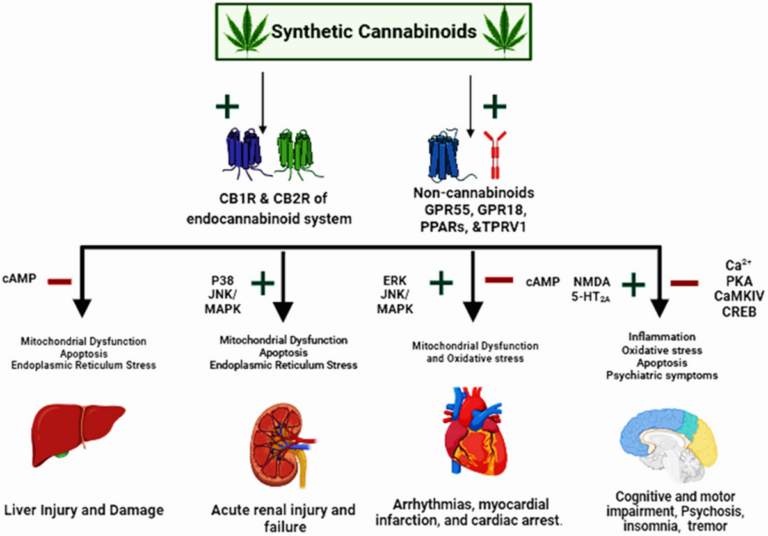
Documented health risks associated with synthetic cannabinoids include:
- Rapid heart rate and chest pain
- Nausea, vomiting, and seizures
- Severe anxiety, paranoia, and panic attacks
- Psychosis and hallucinations
- Kidney injury and respiratory depression
- Loss of consciousness and, in some cases, death
These risks are compounded in correctional settings, where access to emergency medical care may be delayed and where users may be exposed to multiple unknown compounds at once. Our article on what K2 is and how to stay safe provides a broader overview of the health risks.
Withdrawal and Dependence
K2 can also produce dependence. Users who stop suddenly may experience agitation, insomnia, sweating, and intense cravings. In a prison environment, withdrawal can be especially difficult to manage without proper medical support.
The Regulatory Gap Behind K2 Smuggling
One reason K2 remains a persistent problem is that regulation has struggled to keep pace with chemistry. When one synthetic cannabinoid compound is banned, manufacturers tweak the molecular structure and release a new version that may not yet be scheduled. This cat-and-mouse dynamic makes enforcement difficult and creates uncertainty for consumers and retailers alike.
In 2026, federal and state hemp regulations are also shifting. New rules targeting certain hemp-derived cannabinoids have created confusion about what is legal and what is not. But it is important to be clear: regulations aimed at hemp-derived THC products do not make K2 safer or legal. Synthetic cannabinoids like those found in K2 are a separate category of substances, and many are explicitly controlled at the federal level.
For a closer look at how hemp policy changes relate to synthetic cannabinoid risk, see our analysis of K2 and hemp regulation. The key point is that policy shifts do not change the fundamental chemistry or health risks of K2.
What Families and Consumers Should Know
K2 smuggling cases in jails may seem distant from everyday life, but they illustrate a broader reality: synthetic cannabinoids are still circulating, still poorly understood by many users, and still capable of causing serious harm.
For Families of Incarcerated Individuals
If you have a family member in a correctional facility, be aware that K2 exposure can happen through contraband and that symptoms may be severe. Encourage open communication about drug use and mental health, and report any concerns about contraband to facility staff. Support services and educational resources can help reduce demand and harm.
For General Consumers
Products labeled as “herbal incense,” “legal high,” or “research chemical” are not guaranteed to be safe or legal. If a product claims to produce cannabis-like effects, treat it with caution. The safest approach is to avoid unregulated synthetic products entirely and to rely on clearly labeled, tested, and legally compliant products where applicable.
If you are researching cannabis-related products, our overview of herbal incense and related products can help you understand what is available and how to evaluate labels and claims.
Harm Reduction and Prevention
Reducing K2-related harm requires a combination of education, detection, and support. Correctional facilities can invest in better screening technology, train staff to recognize overdose symptoms, and expand access to addiction treatment. Communities can support drug education programs that accurately describe the risks of synthetic cannabinoids without minimizing them.
For individuals, the most effective prevention is avoidance of unregulated synthetic products. If someone you know is using K2, encourage them to seek medical help and avoid using alone. Naloxone does not reverse synthetic cannabinoid overdose, but emergency services should still be called immediately if someone is unresponsive or in distress.
Frequently Asked Questions
Is K2 the same as cannabis?
No. K2 refers to synthetic cannabinoids, which are laboratory-made chemicals that act on the same receptors as THC but are chemically different. Their effects and risks can be much more severe and unpredictable than those of cannabis.
Why is K2 so common in prisons?
K2 is easy to conceal, difficult to detect, and highly profitable. It can be soaked into paper or fabric, making it easier to smuggle than plant material. Demand is also driven by limited access to other substances and by dependence.
Can K2 be detected by standard drug tests?
Standard drug tests often do not detect synthetic cannabinoids. Specialized laboratory testing is usually required, which makes enforcement and clinical diagnosis more challenging.
Does new hemp legislation make K2 legal?
No. Regulations targeting hemp-derived cannabinoids are separate from laws governing synthetic cannabinoids. Many K2 compounds are controlled substances, and new hemp rules do not change that.
What should I do if someone is having a bad reaction to K2?
Call emergency services immediately. Stay with the person, keep them calm, and provide as much information as possible about what was used. Do not leave them alone.
The Bottom Line
K2 smuggling cases in jails are more than crime stories. They are a reminder that synthetic cannabinoids remain a serious public health threat, driven by unpredictable chemistry, weak detection, and persistent demand. Whether you are a family member, a consumer, or simply someone trying to understand the headlines, the safest position is clear: treat K2 and similar products as high-risk, avoid unregulated synthetics, and support policies that prioritize accurate information and harm reduction.