K2 in Ohio Prisons: What the Award-Winning Investigation Reveals About Synthetic Cannabinoid Demand and Risk
Why the Ohio Prison K2 Investigation Matters Beyond Prison Walls
In late 2026, a statewide journalism investigation into K2 in Ohio prisons earned national recognition for exposing how deeply synthetic cannabinoids have penetrated correctional facilities. The reporting, highlighted by the Reynolds Center for Business Journalism, did more than document a contraband problem. It showed how demand for K2 persists even in the most controlled environments in the United States — and why the lessons learned behind bars apply to families, clinicians, and policymakers nationwide.
For anyone trying to understand the modern synthetic cannabinoid landscape, the Ohio investigation is essential reading. It connects three issues that rarely appear in the same conversation: prison security, public health, and the economics of illegal drug distribution. This article breaks down what the reporting found, why K2 remains so attractive to incarcerated populations, and what the findings mean for broader synthetic cannabinoid risk in 2026.
What the Investigation Found About K2 in Ohio Prisons
The award-winning investigation brought together journalists from across Ohio to examine how synthetic cannabinoids move through the state’s correctional system. Rather than treating K2 as a minor contraband issue, the reporting framed it as a systemic challenge involving smuggling networks, inconsistent detection, and severe health consequences for people who use it.
Key themes from the reporting
- Persistent demand: Despite drug testing, searches, and disciplinary policies, incarcerated people continue to seek K2 because it is potent, compact, and difficult to detect.
- Smuggling innovation: Synthetic cannabinoids are often sprayed onto paper, infused into mail, or concealed in ways that bypass traditional contraband screening.
- Health emergencies: K2-related overdoses and medical emergencies inside prisons strain correctional healthcare resources and put staff at risk.
- Enforcement gaps: Detection technology and staffing levels have not kept pace with the creativity of smuggling operations.
The investigation’s recognition matters because it validates what correctional health experts have warned about for years: synthetic cannabinoids are not a niche problem, and they do not stay confined to any single setting. The same chemical compounds that cause chaos in prisons also circulate in communities, headshops, and online marketplaces.
Why K2 Remains Attractive in Controlled Environments
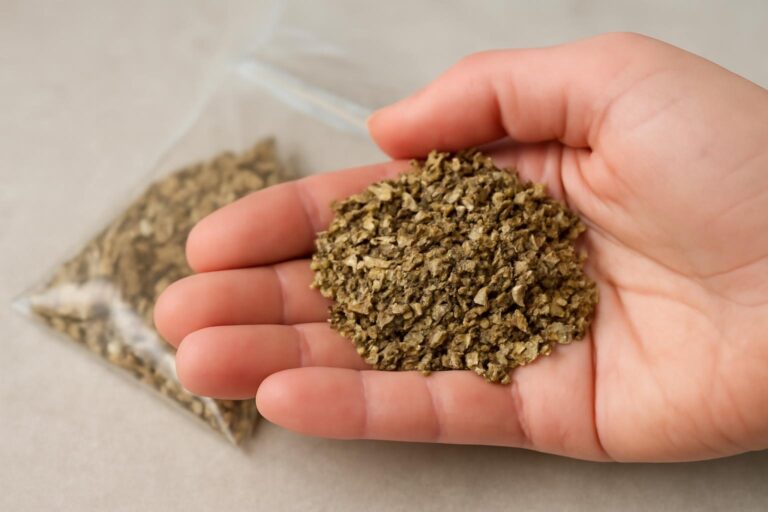
Understanding the appeal of K2 in prisons requires understanding the drug itself. Synthetic cannabinoids are lab-made chemicals designed to bind to the same brain receptors as THC, but often with far greater potency and unpredictable effects. Unlike plant cannabis, they can be dissolved and applied to paper, fabric, or other materials, making them easy to conceal.
For incarcerated populations, several factors drive demand:
- Concealment: A single sheet of treated paper can contain multiple doses and is nearly indistinguishable from ordinary mail or documents.
- Cost efficiency: Per-dose costs can be lower than other contraband, especially when supply networks operate at scale.
- Detection difficulty: Standard drug tests often do not screen for newer synthetic cannabinoids, and chemical structures change frequently to evade regulations.
- Limited alternatives: In environments where access to other substances is restricted, K2 fills a demand gap.
These same factors explain why K2 spreads in other closed or semi-closed settings, including shelters, treatment centers, and schools. The Ohio investigation offers a window into a dynamic that plays out wherever demand meets weak detection.
The Health Risks That Make K2 Especially Dangerous
One of the most important contributions of the Ohio reporting is its attention to health outcomes. Synthetic cannabinoids are not a milder version of cannabis. They are associated with a range of serious and sometimes life-threatening effects, including:
- Severe agitation, anxiety, and panic
- Psychosis and hallucinations
- Seizures and tremors
- Rapid heart rate and chest pain
- Kidney injury and vomiting
- Loss of consciousness and respiratory depression
Because the chemical content of K2 products is inconsistent, users cannot predict potency or effects from one batch to the next. In prison settings, where medical response may be delayed and privacy is limited, these risks are amplified. The investigation’s focus on emergency responses and healthcare strain underscores a broader truth: synthetic cannabinoid toxicity is a public health issue, not just a criminal justice one.
Readers who want a deeper clinical overview can explore our guide on what K2 is and how to stay safe from K2, which covers the basics of synthetic cannabinoid effects and harm reduction.
How K2 Gets Into Prisons: Smuggling Methods and Detection Challenges
The Ohio investigation detailed several pathways that synthetic cannabinoids use to enter correctional facilities. These methods are not unique to Ohio, and understanding them helps explain why K2 remains difficult to control.
Common smuggling routes
- Mail and paper products: K2-infused paper can be sent as ordinary correspondence, legal documents, or books. Once inside, it can be smoked or chewed.
- Visitor contact: Small quantities can be passed during visits, sometimes concealed in clothing or food.
- Staff and contractor involvement: A minority of smuggling cases involve employees or vendors, which complicates security protocols.
- Perimeter throws: Packages containing K2 are sometimes thrown over fences or delivered by drone in less secure facilities.
Detection is equally challenging. K9 units trained on traditional drugs may not alert to synthetic cannabinoids. Chemical tests can be expensive and slow, and new compounds appear faster than labs can update their reference libraries. The result is a cat-and-mouse dynamic that the Ohio reporting captured in detail.
For a broader look at how K2 circulates in another high-risk setting, see our analysis of K2 in prison and the unique safety challenges it creates.
What the Ohio Findings Mean for Families and Communities
The investigation is not only relevant to corrections professionals. Families of incarcerated people should understand that K2 exposure can happen through contaminated mail, shared items, or secondhand smoke. Visitors may also encounter residue on surfaces. While casual contact is unlikely to cause intoxication, the reporting highlights the importance of awareness and hygiene.
Communities outside prison walls face parallel risks. Synthetic cannabinoids sold as “herbal incense” or “legal highs” often carry misleading branding and unregulated chemical content. The same supply chains that serve prisons can serve street markets and online vendors. When one channel is disrupted, demand often shifts rather than disappears.
This is why education matters. Consumers who encounter products marketed as incense or research chemicals should understand that labels do not guarantee safety or legality. Our overview of K2 spice products and their risks can help readers recognize misleading marketing.
Policy Lessons: What the Investigation Suggests for 2026 and Beyond
The Ohio reporting arrives at a moment of significant policy change. Federal hemp rules are shifting, state legislatures are debating bans on hemp-derived cannabinoids, and correctional systems are under pressure to improve safety. The investigation offers several policy takeaways:
1. Detection technology needs investment
Correctional facilities need faster, more affordable testing for synthetic cannabinoids. Without it, smuggling networks retain a significant advantage.
2. Health response must be prioritized
K2-related medical emergencies require rapid intervention. Staff training, naloxone availability (for polysubstance overdoses), and clear protocols can save lives.
3. Demand reduction requires more than enforcement
Incarcerated people often use K2 to cope with stress, trauma, and boredom. Treatment, mental health support, and safer environment design can reduce demand over time.
4. Information sharing across states is essential
Synthetic cannabinoid trends move quickly. The Ohio investigation demonstrates the value of collaborative journalism and data sharing among agencies, researchers, and public health officials.
For readers tracking regulatory developments, our article on K2 health risks provides context on how policy changes intersect with product safety.
Frequently Asked Questions About K2 in Ohio Prisons
What is K2, and why is it common in prisons?
K2 is a slang term for synthetic cannabinoids, lab-made chemicals that mimic THC but often with stronger and less predictable effects. It is common in prisons because it is potent, compact, and easy to conceal on paper or other materials.
Is K2 in Ohio prisons a new problem?
No. Synthetic cannabinoids have circulated in correctional facilities for years. The recent investigation brought renewed attention to the scale of the problem and the gaps in detection and response.
Can visitors accidentally be exposed to K2?
Accidental exposure is possible but rare. Visitors should avoid handling unknown paper items, wash hands after visits, and report any unusual symptoms to medical staff.
What are the immediate health effects of K2?
Effects can include agitation, rapid heart rate, nausea, seizures, psychosis, and loss of consciousness. Severity depends on the specific chemical and dose, which are often unknown.
How can families support someone at risk of K2 use?
Families can encourage treatment engagement, monitor mail and visits for suspicious items, and advocate for better health resources within facilities. Education about synthetic cannabinoid risks is also important.
Does the Ohio investigation change anything for consumers outside prisons?
It reinforces that synthetic cannabinoids are a broader public health concern. Consumers should treat any product marketed as “legal high” or “herbal incense” with caution and understand that labels do not guarantee safety.
Conclusion: A Warning Worth Heeding
The award-winning investigation into K2 in Ohio prisons is more than a story about contraband. It is a case study in how synthetic cannabinoids exploit gaps in detection, regulation, and healthcare. The reporting shows that K2 persists wherever demand exists, and that the consequences — medical emergencies, violence, and strain on public systems — extend far beyond prison walls.
For policymakers, the message is clear: enforcement alone is not enough. For families and communities, the takeaway is equally important: awareness and education remain the first line of defense. As synthetic cannabinoid chemistry continues to evolve, staying informed is not optional — it is essential.