K2 Paper Delivery Kansas: Laws, Health Risks and Safety Information
What Is K2 Soaked Paper?
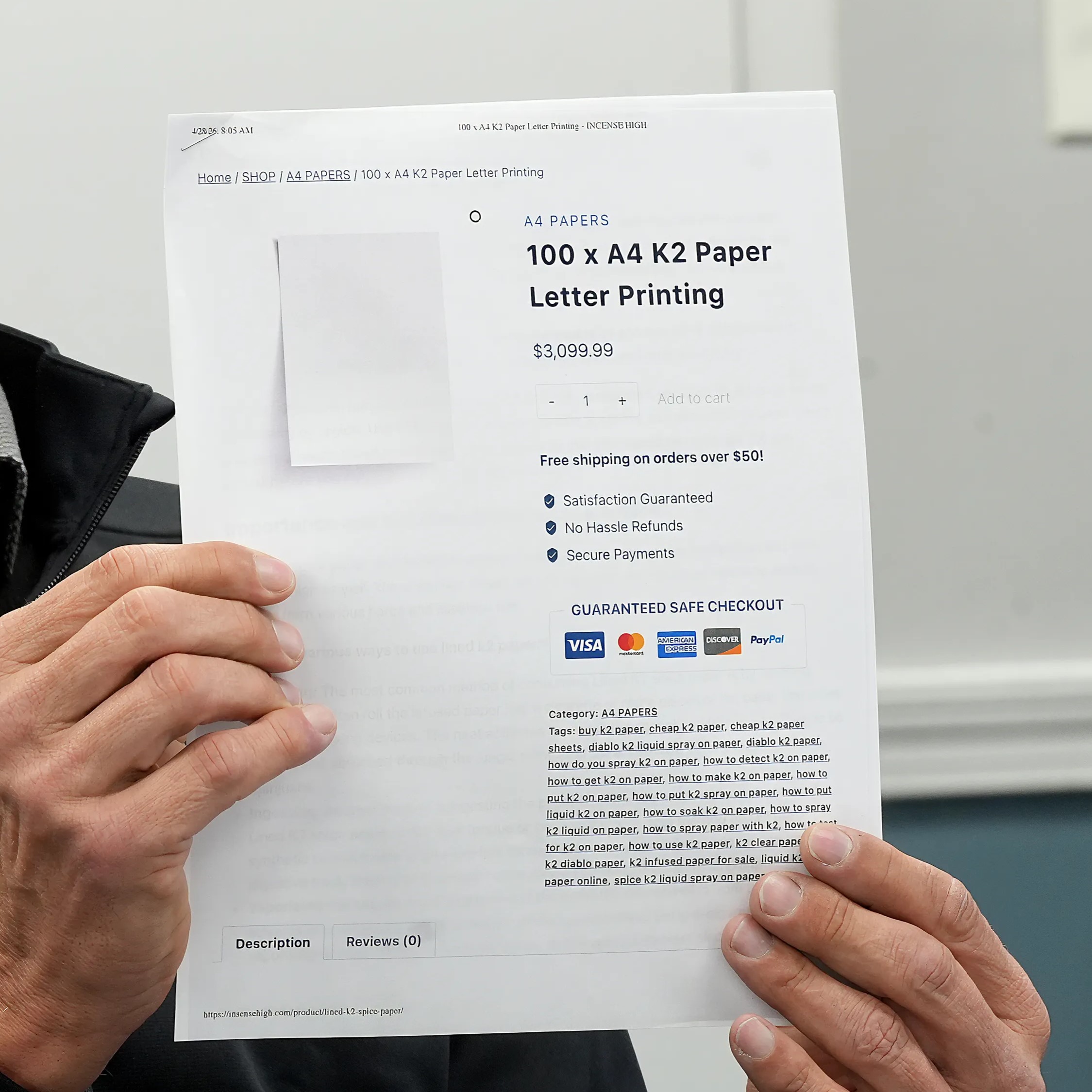
K2 Paper Delivery Kansas! soaked k2 paper (often called “jail paper”) is regular paper—such as letters, greeting cards, or legal documents—that has been infused with liquid synthetic cannabinoids (K2/Spice). This method is heavily used as a contraband technique to smuggle highly dangerous, lab-made chemicals into correctional facilities because dried, drug-laced paper is odorless and visually mimics normal correspondence.
How It Works and Is Used
Consumption: Once inside, incarcerated individuals cut or tear the paper into small fragments or “stamps”. These tiny squares are then smoked (often using improvised electrical heat sources like batteries or outlets) or chewed and swallowed.
The Smuggling Process: On the outside, liquid K2 is dissolved in a solvent. A piece of paper is soaked or sprayed with the mixture and allowed to dry completely. It is then mailed into prisons disguised as standard letters, artwork, or legal mail.
What Are Synthetic Cannabinoids?
Synthetic cannabinoids are man-made chemicals that bind to the same cannabinoid receptors in the brain as THC. Manufacturers create these compounds in laboratories and spray them onto plant material or absorb them into paper. Unlike natural cannabis, synthetic cannabinoids are not derived from plants.
The term “synthetic cannabinoids” covers hundreds of different chemical compounds. Manufacturers frequently change the chemical formulas to evade drug laws. This constant modification makes these substances particularly dangerous because users never know exactly what they are consuming.
Common street names for synthetic cannabinoid products include Spice, K2, Black Mamba, Kush, Kronic, and Bliss. K2 paper specifically refers to the paper-based delivery format.
Why K2 Paper Can Be Dangerous
K2 paper poses significant risks to users for several reasons.
Unpredictable potency: Synthetic cannabinoids can be 5 to 100 times more potent than natural THC. A small amount can produce extreme effects. Because manufacturers do not follow quality control standards, potency varies widely between batches and even between sheets from the same batch.
Unknown chemical composition: Manufacturers frequently change the chemical formulas to stay ahead of drug laws. Users cannot know which specific synthetic cannabinoid they are consuming or what other contaminants may be present.
Severe side effects: Synthetic cannabinoids have been linked to severe adverse reactions including seizures, psychosis, kidney damage, heart attacks, and death. These effects occur more frequently and more severely than with natural cannabis.
Addiction potential: Synthetic cannabinoids can be highly addictive. Regular use leads to tolerance, dependence, and withdrawal symptoms including headaches, nausea, irritability, insomnia, and intense cravings.
Potential Short-Term and Long-Term Health Effects
Short-Term Effects
- Rapid heart rate and elevated blood pressure
- Nausea and vomiting
- Confusion and disorientation
- Severe anxiety and panic attacks
- Paranoia and hallucinations
- Agitation and aggressive behavior
- Seizures and tremors
- Loss of consciousness
Long-Term Effects
- Cognitive impairment and memory problems
- Persistent psychiatric symptoms including psychosis and depression
- Kidney damage and kidney failure
- Cardiovascular damage
- Respiratory problems from smoking
- Addiction and dependence
- Withdrawal syndrome upon cessation
Kansas Laws on Synthetic Cannabinoids
Kansas law prohibits the manufacture, sale, possession, and distribution of synthetic cannabinoids. The Kansas Legislature has enacted specific statutes to address these substances.
Under Kansas Statute 21-5706, it is unlawful for any person to possess a controlled substance. Synthetic cannabinoids are classified as Schedule I controlled substances under Kansas law. Schedule I substances have a high potential for abuse, no currently accepted medical use, and a lack of accepted safety standards.
Kansas Statute 21-5703 makes it illegal to manufacture, distribute, or possess with intent to distribute a controlled substance. This statute applies to anyone who sells or intends to sell synthetic cannabinoid products including K2 paper.
Kansas Statute 21-5705 addresses possession of drug paraphernalia. Any equipment used to ingest, inhale, or otherwise introduce synthetic cannabinoids into the body qualifies as drug paraphernalia under this law.
What Kansas Residents Should Know About Possession and Distribution Laws
Possession Penalties
Possession of synthetic cannabinoids in Kansas is a felony offense. The severity of the penalty depends on the amount of the substance involved.
- First offense: Possession of any amount of synthetic cannabinoids constitutes a drug severity level 4 felony. Penalties include 38 to 46 months in prison and fines up to $100,000.
- Subsequent offenses: Penalties increase with each subsequent conviction. Repeat offenders face longer prison sentences and higher fines.
Distribution Penalties
Selling or distributing synthetic cannabinoids carries significantly harsher penalties.
- Sale or distribution: This offense is a drug severity level 3 felony. Penalties include 55 to 61 months in prison and fines up to $100,000.
- Sale to a minor: If the defendant sells synthetic cannabinoids to someone under 18 years old, the penalties increase substantially. The court may impose additional sentencing enhancements.
Federal Laws
In addition to Kansas state laws, federal law also prohibits synthetic cannabinoids. The Federal Analog Act classifies any chemical substantially similar to a Schedule I or II controlled substance as a controlled substance analog. Possession or distribution of these analogs carries federal penalties including prison time and fines.
How to Recognize a Suspected Synthetic Cannabinoid Exposure
Recognizing the signs of synthetic cannabinoid exposure can help you respond quickly and appropriately.
Behavioral signs: The person may appear confused, agitated, or paranoid. They may speak rapidly or incoherently. They may exhibit unusual physical movements or tremors.
Physical signs: Look for rapid heart rate, dilated pupils, nausea, vomiting, or sweating. The person may have difficulty standing or maintaining balance.
Psychological signs: The person may experience hallucinations, delusions, or severe anxiety. They may express fear or believe that others are trying to harm them.
Environmental clues: You may find small pieces of paper, rolling papers, or smoking devices. The area may have a chemical or herbal smell. Packaging labeled as “herbal incense” or “potpourri” may be present.
What to Do During a Medical Emergency
If you suspect someone is experiencing a medical emergency related to synthetic cannabinoids, take immediate action.
- Call 911 immediately. Do not wait for symptoms to improve on their own. Synthetic cannabinoid overdoses can be fatal.
- Stay with the person. Do not leave them alone. Keep them calm and reassured.
- Provide information to emergency responders. Tell them what the person consumed, how much, and when. If you have the packaging or any remaining product, give it to the medical team.
- Do not induce vomiting. Unless directed by medical professionals, do not try to make the person vomit.
- Do not give them food or drink. Wait for medical professionals to assess the situation.
- Move them to a safe location. If possible, move them away from traffic, stairs, or other hazards.
Frequently Asked Questions
1. Is K2 paper legal in Kansas?
No. K2 paper contains synthetic cannabinoids, which are classified as Schedule I controlled substances under Kansas law. Possession, sale, and distribution are illegal and carry felony penalties.
2. What are the penalties for possessing synthetic cannabinoids in Kansas?
Possession of synthetic cannabinoids is a drug severity level 4 felony in Kansas. Penalties include 38 to 46 months in prison and fines up to $100,000 for a first offense. Subsequent offenses carry longer sentences.
3. How do synthetic cannabinoids differ from natural cannabis?
Synthetic cannabinoids are man-made chemicals that bind more strongly to cannabinoid receptors in the brain. They produce much more potent and unpredictable effects than natural cannabis. Synthetic cannabinoids have been linked to severe health effects including seizures, psychosis, and death, which occur far less frequently with natural cannabis.
4. What should I do if I suspect someone has overdosed on synthetic cannabinoids?
Call 911 immediately. Stay with the person and keep them calm. Provide emergency responders with information about what they consumed. Do not induce vomiting or give them food or drink. Move them away from any hazards.
5. Where can I get help for synthetic cannabinoid addiction in Kansas?
The Kansas Department for Aging and Disability Services provides resources for substance abuse treatment. You can also contact the Substance Abuse and Mental Health Services Administration (SAMHSA) National Helpline at 1-800-662-4357 for confidential support and referrals to local treatment facilities.
Conclusion and Public Health Resources
K2 paper and synthetic cannabinoids pose serious risks to public health and safety in Kansas. These substances are illegal under state and federal law, and they carry severe penalties for possession and distribution. The health effects of synthetic cannabinoids can be life-threatening and include seizures, psychosis, kidney damage, and death.
If you or someone you know is struggling with synthetic cannabinoid use, help is available. Contact the following resources for support:
- SAMHSA National Helpline: 1-800-662-4357
- Poison Control: 1-800-222-1222
- Kansas Department for Aging and Disability Services: Visit their website for local treatment resources
- National Institute on Drug Abuse: Provides research-based information on substance use disorders
Internal Links
- What Are Synthetic Cannabinoids?
- Health Risks of Synthetic Drugs
- Understanding Drug Laws
- Addiction Resources
- Public Safety Information
External Authority Links
- Kansas Statute 21-5706 – Possession of Controlled Substances
- Kansas Statute 21-5703 – Manufacture or Distribution of Controlled Substances
- DEA Synthetic Cannabinoids Fact Sheet
- CDC Health Alert on Synthetic Cannabinoids
- National Institute on Drug Abuse: Synthetic Cannabinoids
- Kansas Department of Health and Environment
- Poison Control
- SAMHSA National Helpline
Disclaimer for K2 Paper Delivery Kansas
This disclaimer applies to any information, content, or services related to K2 paper, synthetic cannabinoids, or similar products offered for delivery within the state of Kansas.
Legal Status: K2 paper contains synthetic cannabinoids that are classified as Schedule I controlled substances under both federal law and Kansas state law. Possession, sale, distribution, and delivery of these substances are illegal and carry severe criminal penalties including felony charges, substantial fines, and imprisonment.
User Responsibility: Any individual who chooses to purchase, possess, or use K2 paper assumes full responsibility for all legal, health, and financial consequences. Users must comply with all applicable federal, state, and local laws.
Age Restriction: We do not provide services to individuals under the age of 18 or 21 where applicable by law. By accessing this information, you represent that you are of legal age in your jurisdiction.
No Guarantees: We make no guarantees regarding product quality, potency, purity, or safety. All products are sold “as is” without any warranty express or implied.
Shipping and Delivery: Any shipment of K2 paper to Kansas violates state and federal law. We do not facilitate or encourage such shipments. Users who attempt to receive shipments assume all legal risks.
Indemnification: Users agree to indemnify and hold harmless any parties associated with this information from any claims, damages, or liabilities arising from the use of K2 paper or related products.
Changes to Disclaimer: We reserve the right to modify this disclaimer at any time without prior notice. Continued access to this information constitutes acceptance of any changes.
Governing Law: This disclaimer shall be governed by and construed in accordance with the laws of the State of Kansas and applicable federal law.